

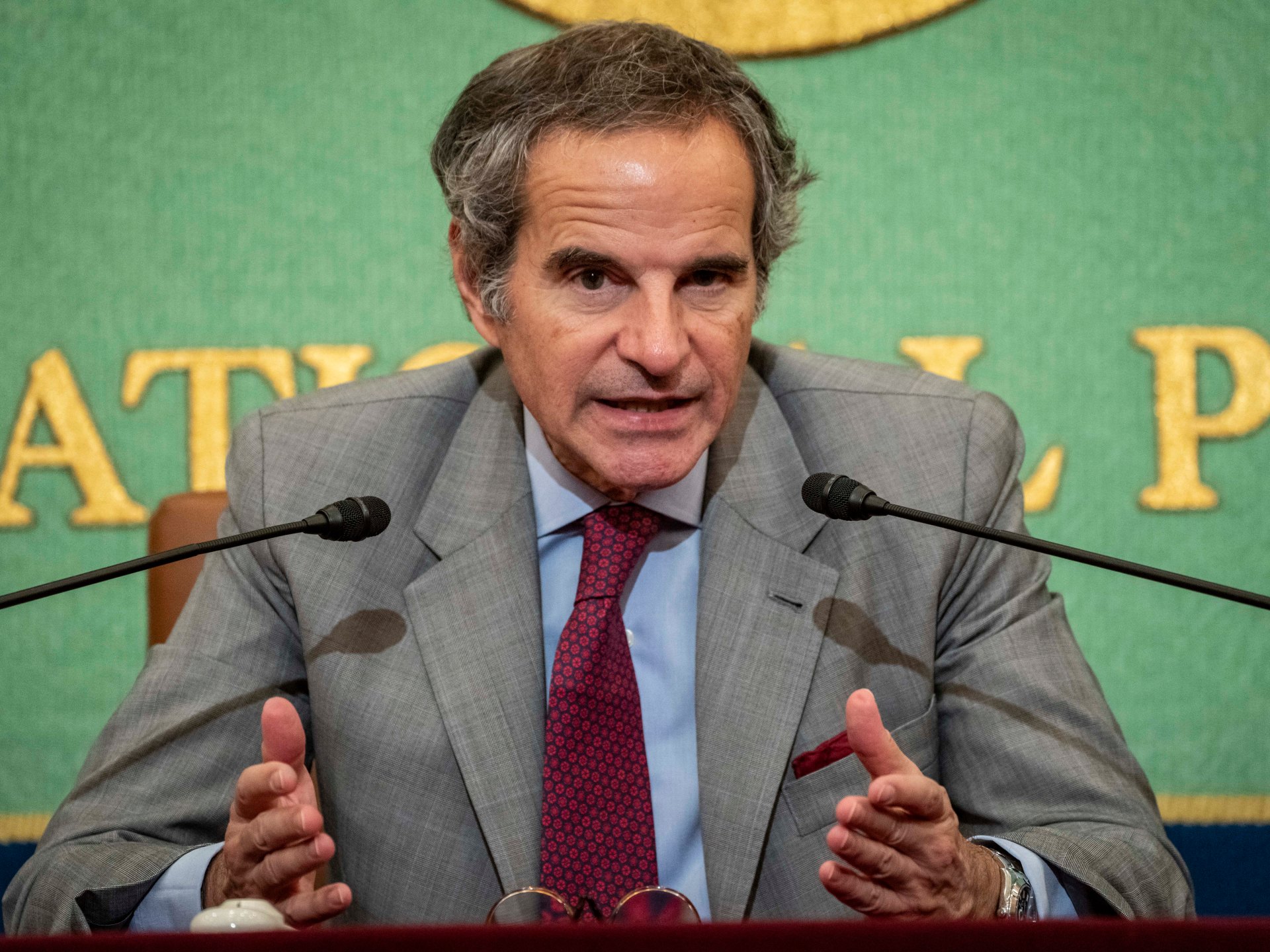

The head of the International Atomic Energy Agency (IAEA) has asserted that a “very strong system of verification” must by put in place to monitor Iran’s nuclear programme.
Director General Rafael Grossi called on Friday for the nuclear watchdog to be given full access, noting that ensuring Iran is not able to develop nuclear weapons is the key objective of the preliminary ceasefire agreement with the United States.
- list 1 of 3World aids rescue effort as Venezuela quake death toll hits 235
- list 2 of 3North Korea conducts major weapons tests; South training ‘drone warriors’
- list 3 of 3‘Affordability crisis’: How the Western housing crisis spiralled
end of list
The US and its Western allies have for years warned that Tehran’s nuclear programme may be aimed at developing the capacity to build a weapon. Iran has always firmly denied it has any such intention, insisting its ambitions for the programme are strictly civilian.
“The government of Iran has affirmed quite clearly that [developing nuclear weapons] is not their intention, but of course intentions are not enough,” Grossi told reporters on Friday. “In order to have certainty, we need to have a very strong system of verification as soon as practicable.”
The IAEA’s position is not to judge intentions, he stressed, but it also cannot accept things at face value. “We must verify everywhere.”
Inspections of Iran’s nuclear sites, which were attacked by the US and Israel in a 12-day war last June, have become a key point of disagreement as Washington and Tehran continue negotiations to secure a permanent peace deal based on the 14-point memorandum of understanding signed earlier this month.
Tehran suspended cooperation with the IAEA following the US and Israeli attacks last year. In September, it agreed to allow inspectors to return, and IAEA officials have since visited nuclear sites in the country.
Advertisement
However, Iran has not yet granted access to the nuclear sites that were bombed, and its stores of enriched uranium remain unaccounted for.
‘War of statements’
Both the US and Iran have made contradictory statements concerning the issue as they have continued talks aimed at a long-term ceasefire.
The US has claimed that inspections were fully agreed on in the MoU and subsequent talks; Iran has said discussion on the topic remains limited for now.
Iranian Deputy Foreign Minister Kazem Gharibabadi said on Wednesday that access to the attacked nuclear sites and materials would be examined and resolved “within the framework of a final agreement” with the US.
He said United Nations inspections were dependent on the US taking “practical action in terminating all sanctions”.
The US maintains this is not the case. President Donald Trump has dismissed Tehran’s “protestations and false statements” and claimed Iran has agreed to “highest level nuclear inspections”.
Grossi noted that “a war of statements” is being waged, but noted that the MoU specifically indicated that the nuclear part of the agreement would “be supervised by the IAEA”.
“The technical work has started, and we hope to be there soon,” he added.
In terms of timing, Grossi said “it’s not essential if we go in one week or two weeks” and pointed to the fact that the MoU has multiple elements aside from the nuclear issue.
Iran’s Ministry of Foreign Affairs on Friday once more rejected the accusations regarding its nuclear programme, as it responded to a joint statement issued by the US secretary of state and Gulf Cooperation Council foreign ministers, which the previous day stated their shared objective of preventing Tehran from developing a nuclear weapon.
Stressing that Iran’s programme remains “peaceful”, it said in a statement that the accusations are fabricated by the US and Israel, and went on to urge GCC member states to cooperate with Tehran on establishing a nuclear-weapons-free zone in West Asia.
Related News
Israeli forces shoot and kill Palestinians in occupied West Bank, Gaza

US judge extends block on Trump’s $1.8bn ‘anti-weaponisation’ fund
Indonesian students protest gov’t policies amid economic strain