

Hezbollah leader Naim Qassem has rejected the framework agreement signed by Lebanon and Israel in Washington DC, calling it “humiliating, shameful and a surrender of sovereignty” for Beirut.
This comes as the Lebanese Ministry of Public Health said one person was killed and two were injured in Israeli strikes on southern Lebanon on Saturday, the first casualties since the deal was signed.
- list 1 of 4What is the framework agreement signed by Israel and Lebanon?
- list 2 of 4Iran war day 120: Tehran condemns US strikes, says it violates MoU
- list 3 of 4Could Israel’s coming election see an end to Netanyahu’s political career?
- list 4 of 4Israel-Lebanon deal ties ceasefire to Hezbollah disarmament: Will it work?
end of list
In a statement released on Saturday, Qassem rejected linking Israel’s withdrawal from Lebanon to Hezbollah’s disarmament, which is a key part of the US-mediated agreement signed on Friday.
“We will continue as a resistance in the field to defeat the occupation [Israel] … We did not leave the field under difficult circumstances and we will not abandon it,” Qassem said.
The Hezbollah leader also accused Lebanon’s government of legitimising Israel’s occupation “for many years to come” by signing the agreement with Israel, saying it “could lead to the annexation of these lands to the Zionist entity”.
Israel’s Prime Minister Benjamin Netanyahu, Finance Minister Bezalel Smotrich and other officials have suggested that Israel might remain in Lebanon regardless of Hezbollah’s disarmament.
“We are there until Hezbollah disarms, and I think also beyond that, because we need defendable borders,” Smotrich said earlier this week.
On Saturday, Israel’s defence minister, Israel Katz, said he and Netanyahu instructed Israeli forces to prepare for an “extended stay” in the so-called security zone the Israeli army occupies in southern Lebanon.
Protests against the agreement
The agreement does not force Israel to withdraw from southern Lebanon.
Advertisement
As Al Jazeera’s Lebanon correspondent Zeina Khodr noted: “The word withdrawal is not in [the] text.”
Instead, Khodr said the text is a “path towards normalisation [between Israel and Lebanon] – the two states both recognise each other’s right to exist in ‘peace’, declare intention to formally end state of war, pursue direct negotiations under US mediation, establish permanent channels of direct communication and begin drafting a comprehensive peace and security agreement”.
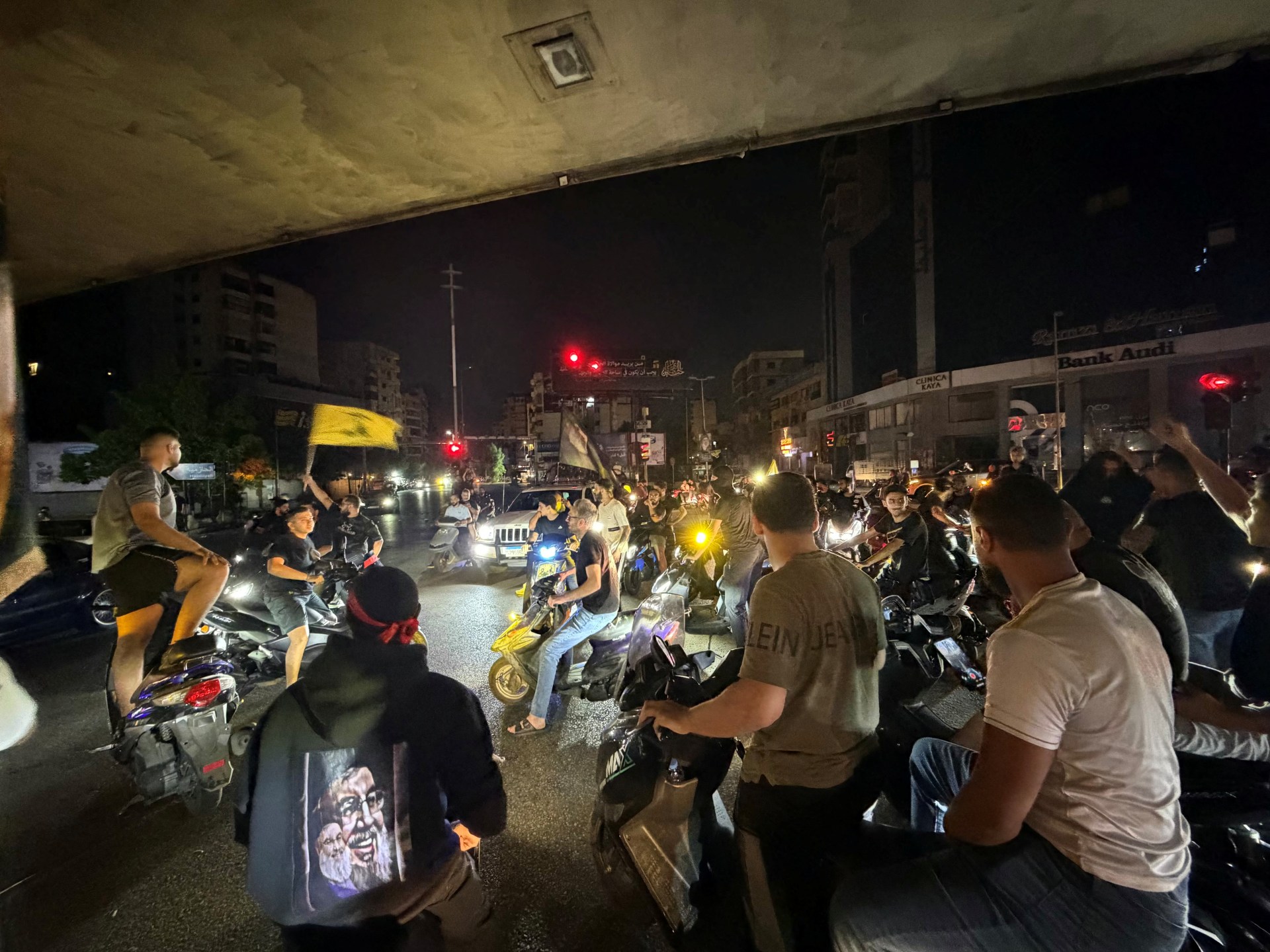
After the signing, Hezbollah supporters in Lebanon made their anger known, taking to the streets of Beirut on Friday evening, burning tyres and blocking a road leading to the airport.
They were protesting against the agreement, as well as Israeli forces remaining in Lebanese territory and continuing Israeli air raids in southern Lebanon.
The Lebanese army on Saturday called on its citizens “to act responsibly in light of calls for demonstrations in Beirut and other areas”.
We will not allow any breach of security or infringement on civil peace through actions with unforeseen consequences,” the army command said.
In response to the Hezbollah-led protests, Public Prosecutor Judge Ahmad Rami al-Hajj issued a judicial order, tasking the Lebanese security forces with preventing riots, NNA reported. The judge also requested that security agencies work to identify rioters so legal action can be taken.
Despite the agreement, Lebanon’s state-run National News Agency (NNA) reported Israeli forces bombed near the southern towns of Markaba and Nabatieh al-Fawqa on Saturday morning.
NNA also said Israeli forces bombed overnight near the town of Markaba, 1.5km (one mile) from the Israel-Lebanon border.
On Saturday afternoon, Israeli warplanes again bombed the town of Nabatieh al-Fawqa in southern Lebanon, killing one person and injuring two others, the Lebanese Health Ministry said.
It added that at least 4,246 people have been killed and 12,190 wounded by Israeli attacks on Lebanon since March 2, when hostilities between Israel and Hezbollah erupted into all-out war.
Mixed reactions to deal
Nevertheless, Lebanese officials seem optimistic about the deal and its potential for ending hostilities with neighbouring Israel.
Lebanese Member of Parliament and former Justice Minister Ashraf Rifi praised the agreement, saying Lebanon was finally “acting like a state”.
“It is no longer acceptable for Lebanese decision-making to remain hostage to the Iranian project, or for Hezbollah to continue its dominance over the state and its institutions,” he added.
Advertisement
Lebanese MP and leader of the Free Patriotic Movement Gebran Bassil said the framework agreement between Israel and Lebanon “requires responsible engagement”.
However, Alon Pinkas, an Israeli former ambassador and consul general in New York, told Al Jazeera that he’s “very doubtful and sceptical that this [agreement] will work out because the deal is between Israel and Lebanon with the US, and Israel and Lebanon do not really have territorial issues or any kind of issues; the issue here is Hezbollah”.
Former US diplomat Nabeel Khoury was even harsher in his criticism of the deal regarding Lebanon. He told Al Jazeera the Israel-Lebanon framework agreement is “advantageous” for the Israelis, but it’s a “very dangerous” agreement for Lebanon.
Hezbollah MP Hassan Fadlallah told Al Jazeera that any attempt by the Lebanese army to enforce a Washington-brokered agreement would lead to “civil war”.
Related News
Republicans say they will back Blanche after US Justice Department order
Why a North Sea oilfield is emerging as British PM Burnham’s big test
Russia launches largest ballistic missile attack on Kyiv since start of war