
The Caribbean AI Moment? – Trinidad Got There First. Who’s Next And Who Pays For It?
 26 July 2026
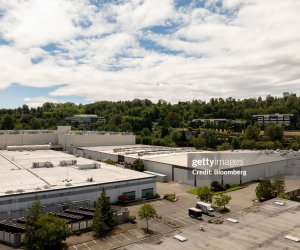


News Americas, MIAMI, FL, Sun. July 26, 2026: the region’s first stop. The question the rest of the Caribbean should be asking isn’t whether this was a good deal for Trinidad – it’s what it will take for the next island to be next, and who finances the gap between “signed MOU” and “operational campus” in the Caribbean AI race.
That gap is the real story. Trinidad and Tobago has signed a trio of agreements with U.S. companies that could bring more than US$5 billion in investment to the twin-island republic – the first data center agreements of their kind between major U.S. technology and services firms and any Caribbean nation. But the deals also expose, in stark numbers, exactly what a small island grid and water system look like when asked to absorb hyperscale AI infrastructure: a 2.4-gigawatt national generation capacity being asked to accommodate up to 450 additional megawatts of demand, in a country where parts of the population already receive water on a rationed schedule.
The Memoranda of Understanding, signed July 11 under Prime Minister Kamla Persad-Bissessar’s administration, set the framework for two large-scale data center projects and the revival of a dormant steel plant. Foreign and CARICOM Affairs Minister Sean Sobers signed on the government’s behalf, with officials crediting U.S. government facilitation for bringing the parties together.

Professional services giant Ernst & Young signed on to develop a 300-megawatt data center using its Energy to Intelligence platform, partnering with third parties on construction. A second agreement with Hummingbird AI Holdings, a Florida-based firm led by Massy Holdings non-executive director Marc-Kwesi Farrell, outlines a 150-megawatt AI infrastructure and data center campus, with room to scale up to 500 megawatts. First operations are targeted for early 2028, pending due diligence.
A third MOU with Pinnacle Steel and Vanadium Corporation covers recommissioning the iron and steel plant at Point Lisas — a facility that, if fully developed, officials say could eventually supply up to half of U.S. demand for vanadium, a metal used in aerospace and defense manufacturing.
Combined, the government projects the three initiatives could generate more than 5,000 jobs, spanning construction, engineering, cybersecurity and facility operations.
Caribbean economies are used to two kinds of foreign capital: tourism development and commodity extraction. AI infrastructure is a third category entirely – capital-intensive, long-horizon, and dependent on power and connectivity rather than beaches or barrels. That’s precisely why it pulls in adjacent investment rather than sitting in isolation: cloud providers, network operators, specialized contractors, and – critically – whoever finances the grid and water upgrades a hyperscale campus requires before it can switch on.
The agreements are non-binding frameworks, not final investment decisions – each project still faces technical, commercial, and regulatory due diligence before ground is broken. And the questions being raised locally are the right ones. Data centers, particularly AI-focused facilities, are heavy consumers of both electricity and water for cooling. Trinidad and Tobago’s total generation capacity sits at roughly 2.4 gigawatts, and large parts of the country already operate on scheduled water supply, with some homes relying on tanks because taps run as rarely as once a week. A recent United Nations University report estimates data centers could account for close to 3% of global electricity use by 2030 – a figure that sharpens exactly what a 300-to-500-megawatt buildout would demand of a grid and water system already under strain.
That gap – between the capital arriving for the data centers and the capital still needed for the power and water infrastructure underneath them – is where the next wave of Caribbean deal flow sits. It’s a financing conversation as much as a construction one.
Whether or not these specific projects reach financial close, they signal something every Caribbean government, investment promotion agency, and developer should be watching closely: global AI infrastructure capital has started actively scouting the region, and Trinidad moved first. The islands and territories positioning themselves now – with grid capacity, water resilience plans, and investment-ready proposals in hand – are the ones likely to catch the next wave of this capital, rather than watching it pass them by.
Invest Caribbean and AI Capital Exchange (AICE) work with pre-qualified borrowers – governments, developers and investors – pursuing exactly this kind of energy, water and infrastructure financing across the region. If the Caribbean’s AI infrastructure moment is one your project or government wants in on, start with a Capital Readiness Check.
Related News

Caribbean Wages 2026: Guyana And Suriname’s Oil Boom vs. Some Of The Region’s Lowest P...

The $936 Billion Wall: Bridge Loans And Caribbean and Latin American Developers
Guyana – US Pushes To Lead Guyana’s Energy Future As Country’s Aging Ferry Flee...