

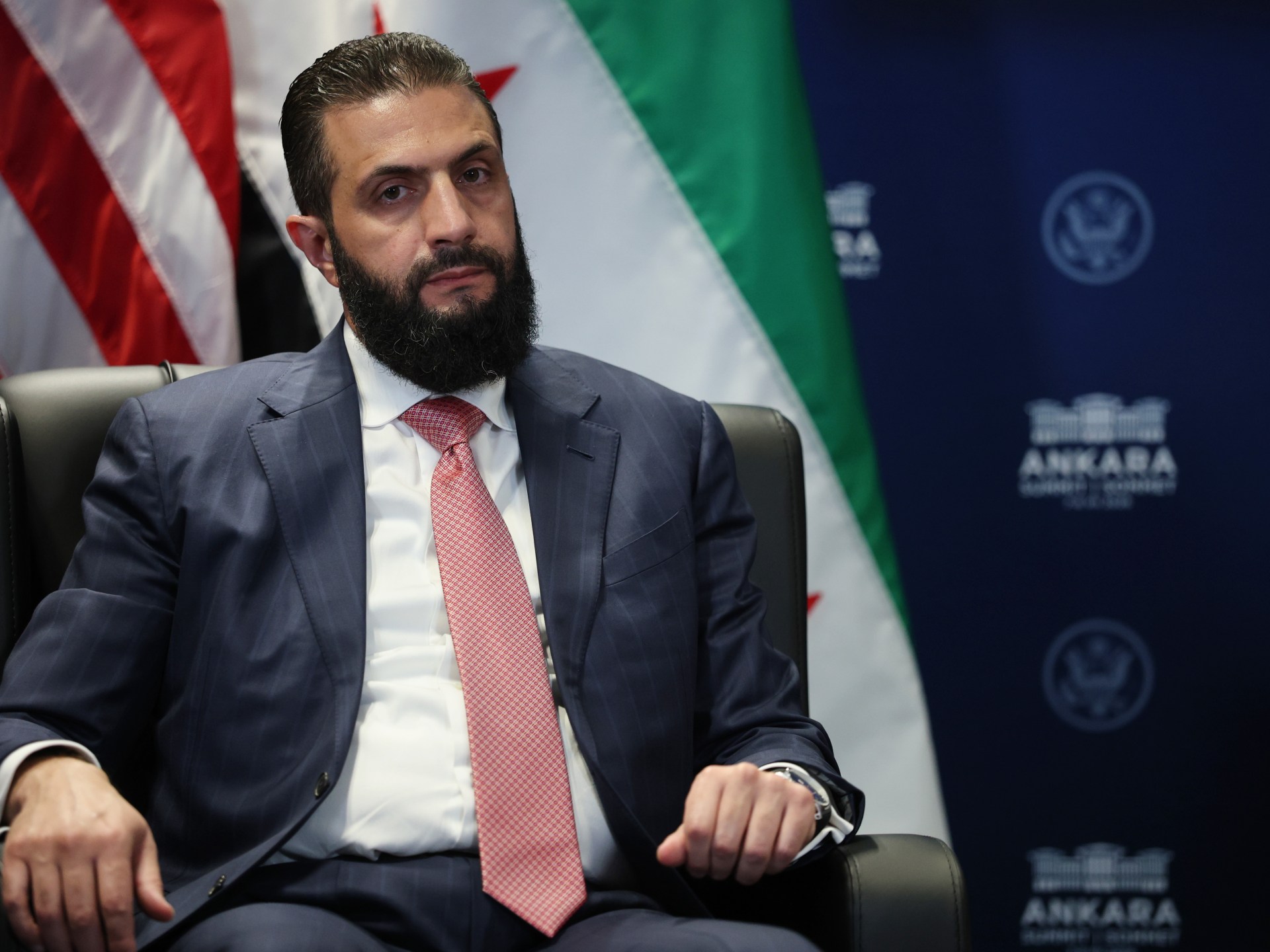

The global chemical weapons’ watchdog has announced it has handed voting rights back to Syria because “concrete steps” have been taken to address outstanding issues since the fall of the Bashar al-Assad regime.
In a statement published on Thursday, the Organisation for the Prohibition of Chemical Weapons (OPCW) said the decision follows a “significant change” in circumstances since Syria was suspended in 2021. That was due to the former government’s failure to declare the full scope of its chemical weapons programme and the repeated use of poison gas during the civil war.
- list 1 of 3French president visits Syria ahead of NATO summit in Turkiye
- list 2 of 3Eighteen wounded as explosions rock Damascus during Macron’s visit to Syria
- list 3 of 3Syria’s capital rocked by blasts during Macron visit
end of list
Since a lightning offensive ousted long-time ruler al-Assad in 2024, “the new Syrian authorities committed to fulfilling Syria’s obligations under the Convention and have since taken concrete steps to cooperate with the Technical Secretariat to achieve this goal”, read the statement.
Actions taken by the new government of President Ahmed al-Sharaa include facilitating verification activities and taking initial steps in destroying identified remnants.
“These decisions reflect the tangible progress achieved through continued cooperation and constructive engagement between the Technical Secretariat and the Syrian Arab Republic, with the support of the wider community of States Parties,” said OPCW Director-General Fernando Arias.
In 2013, Syria joined the OPCW and agreed to the destruction of its weapons to be supervised by the watchdog. Back then, Syria was believed to possess about 1,000 tonnes of toxins and had agreed to destroy them under a joint Russian-US proposal designed to avert a US military strike on its territory.
Advertisement
Syria’s decision followed a global outcry over a suspected chemical attack that same year in Ghouta, an eastern suburb of the capital Damascus.
US intelligence estimated that at least 1,400 people, including 426 children, were killed in that attack which it attributed with “high confidence” to the Syrian government. Al-Assad denied involvement and blamed rebels.
According to OPCW, while Syria submitted an initial declaration of its chemical weapons programme, the former government did not declare all its chemical weapons programme and attempted to mislead inspectors about its overall scope and scale.
Related News
In pictures: Venezuela earthquakes death toll surpasses 1,700
Are US and Iranian negotiators meeting in Doha? What we know about talks
Russia says Ukraine rejects local ceasefire in dispute over Kostiantynivka