

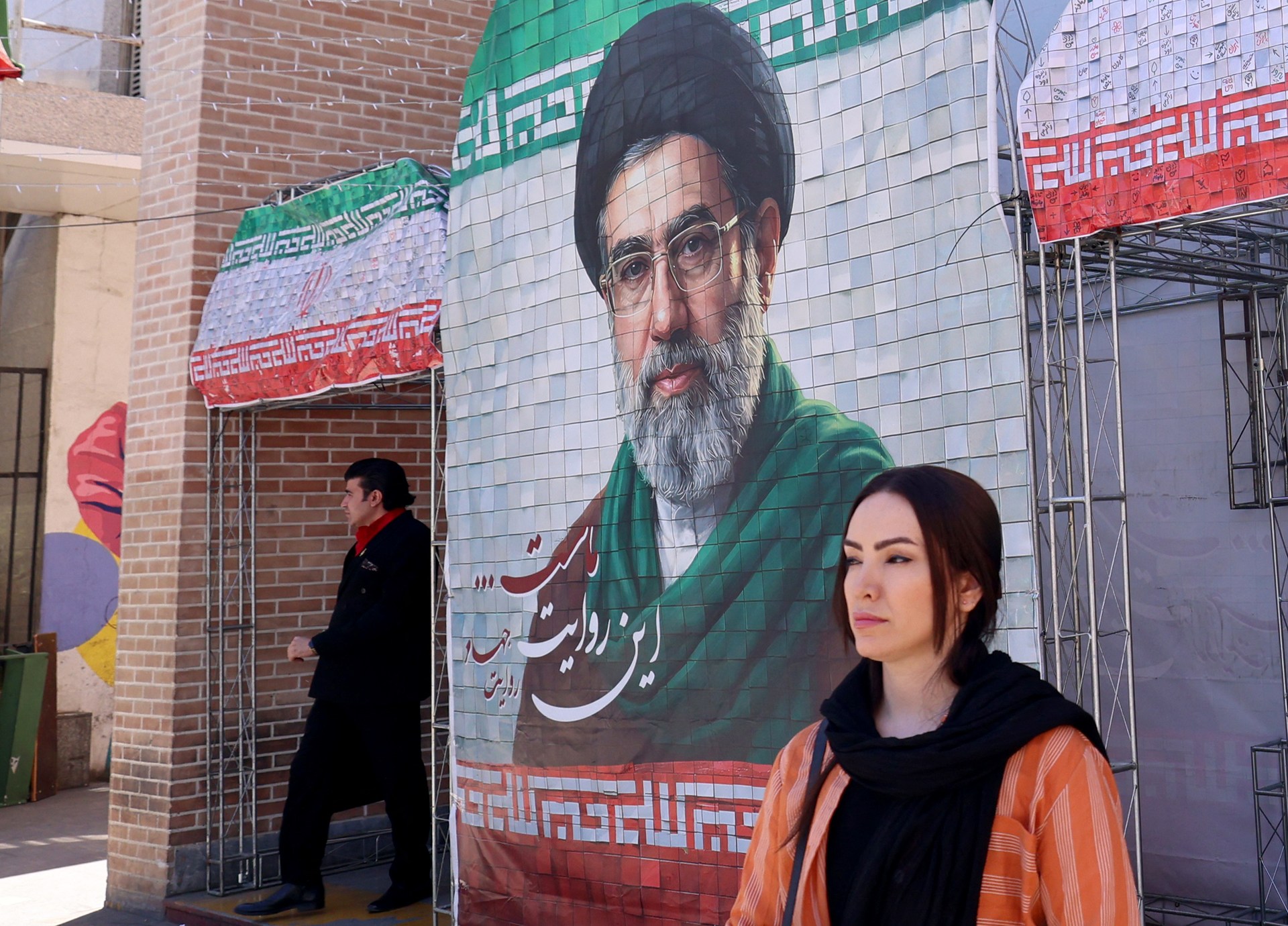

A fragile ceasefire in the US-Israel war on Iran is coming under growing strain as several Gulf countries have reported drone attacks.
Qatar said on Sunday that a drone struck a cargo ship in Qatari waters, sparking a fire, while Kuwait and the United Arab Emirates said they repelled drone attacks.
- list 1 of 3ASEAN leaders adopt measures to ease economic pain caused by Iran war
- list 2 of 3The war on Iran will likely end in American retreat
- list 3 of 3‘On level of atomic bomb’: Iran highlights Hormuz importance amid US talks
end of list
Though no Gulf country reported casualties in the latest attacks, they have put pressure on the fragile ceasefire, which took effect on April 8.
Qatar’s Ministry of Defence said the freighter had been arriving in the country’s waters from the UAE capital, Abu Dhabi, and was hit by a drone northeast of the port of Mesaieed.
“The vessel continued its journey toward Mesaieed Port after the fire was brought under control,” the ministry said.
The United Kingdom Maritime Trade Operations (UKMTO) said a bulk carrier reported being struck by an “unknown projectile”, and a small fire had been extinguished, but there were no casualties from the incident. “There is no reported environmental impact,” it said.
Kuwait’s Defence Ministry said a “number of hostile drones” were detected in the country’s airspace at dawn. In a post on X, a spokesperson said the drones were dealt with “in accordance with established procedures”, but did not specify where the drones were launched from.
The UAE Defence Ministry said two Iranian drones were intercepted.
“UAE air defence systems successfully engaged two UAVs launched from Iran,” the ministry said in a statement on X.
Ceasefire tested
The Trump administration has said the truce is still in effect, but a naval battle has been taking place in the Gulf region, with Iran restricting traffic through the Strait of Hormuz, a strategic waterway through which a fifth of traded oil transited before the war, and the United States imposing a blockade of Iranian ports.
Advertisement
Several attacks have been reported on ships in the Gulf and the countries in the region over the past week.
On Friday, the US struck two Iranian oil tankers, saying they were trying to breach its blockade of Iran’s ports.
On Tuesday, the UAE said it came under attack from Iranian missiles and drones for the second day in a row. Iran’s Islamic Revolutionary Guard Corps (IRGC), however, denied the claim.
The IRGC Navy on Sunday reiterated its warning that any attack on Iranian oil tankers or commercial vessels would be met with a “heavy assault” on one of the bases in the region used by US forces and enemy ships.
The spokesperson for the Iranian parliament’s foreign policy and security committee, Ebrahim Rezaei, said Tehran’s “restraint is over”.
“Any aggression against our vessels will be met with a heavy and decisive Iranian response against American vessels and bases,” Rezaei wrote on X.
“The clock is ticking against the Americans’ interests; it is to their benefit not to act foolishly and sink themselves deeper into the quagmire they have fallen into. The best course is to surrender and concede concessions. You must get used to the new regional order,” he added.
Talks to end the war
While the truce remains in effect, President Donald Trump has repeatedly threatened to resume the US bombardment if Iran does not accept a deal which includes reopening the Strait of Hormuz and rolling back its nuclear programme.
Iran is still mulling its response to a 14-point proposal by Washington, with Iranian frozen assets and war reparations among other main sticking points.
In a meeting with US Secretary of State Marc Rubio on Saturday, Qatar’s Prime Minister Sheikh Mohammed bin Abdulrahman bin Jassim Al Thani pushed for all parties to respond to the ongoing mediation efforts and to reach an agreement for lasting peace.
Qatar’s prime minister also held a phone call with Iran’s Foreign Minister Abbas Araghchi, the Qatari foreign ministry reported on Sunday.
Sheikh Mohammed told Araghchi that Iran’s use of the Strait of Hormuz as a “bargaining chip” would only deepen the crisis in the Gulf, and said all parties in the conflict should respond to mediation efforts to end the war.
Reporting from Tehran, Al Jazeera’s Tohid Assadi said when it comes to diplomatic engagement, it seems that the US and Iran want the content of any negotiations to remain private.
Meanwhile, there is a mixture of different sentiments among Iranian citizens, he noted.
“Since the early days of the war, people have gathered to show their sense of nationalism and support for the political establishment,” he said.
Advertisement
“But we also know that there is a sense of frustration, especially when it comes to soaring prices and economic difficulties,” he added.
At a meeting on the reconstruction after damage caused by the war, President Masoud Pezeshkian said negotiations with the US on ending the war do not mean Iran is surrendering.
“The goal is to realise the rights of the Iranian people and defend national interests with authority,” he said.
Related News

Palestine weekly wrap: Under cover of ceasefire, Israel increases grip
Japan’s Takaichi pledges deeper energy cooperation with Vietnam
Rubio meets Pope Leo: Can they heal White House-Vatican rift?