

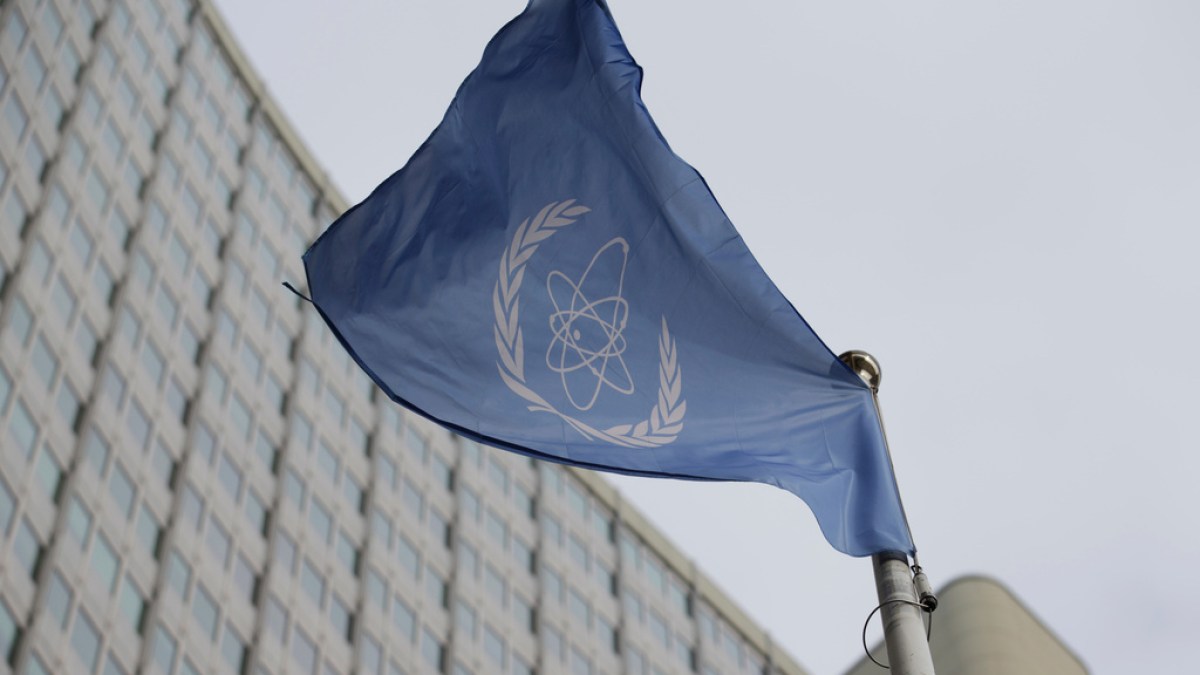

The United Nations nuclear watchdog has held a special session on Ukraine amid growing fears that Russian attacks on its energy facilities could trigger a nuclear accident.
Rafael Grossi, director-general of the International Atomic Energy Agency (IAEA), said at the start of Friday’s extraordinary board meeting in Vienna that the war in Ukraine posed “the world’s biggest threat to nuclear safety”.
- list 1 of 3Russia to pause bombing Kyiv during extreme winter conditions, says Trump
- list 2 of 3Zelenskyy seeks 50,000 Russian ‘losses’ a month to win the Ukraine war
- list 3 of 3Ukrainian President Zelenskyy invites Putin to Kyiv for talks
end of list
The meeting was held as an IAEA expert mission conducted a weeks-long inspection of 10 electrical substations that Grossi described as “crucial to nuclear safety”.
Although nuclear power plants generate power themselves, they rely on an uninterrupted supply of external power from electrical substations to maintain reactor cooling.
Ukraine has four nuclear power plants, three of them under Kyiv’s control, with the fourth and biggest in Zaporizhzhia occupied by Russian forces since the early days of their full-scale invasion in 2022.
Moscow and Kyiv have repeatedly accused each other of risking a nuclear catastrophe by attacking the Zaporizhzhia site.
The plant’s six reactors have been shut down since the occupation, but the site still needs electricity to maintain its cooling and security systems.
Earlier this month, Russia and Ukraine paused local hostilities to allow repairs on the last remaining backup power line supplying the plant, which was damaged by military activity in January.
Ukraine is also home to the former Chornobyl plant, the site of the world’s worst nuclear accident in 1986. The site’s protective shield containing radioactive material was damaged last year in a drone strike allegedly carried out by Russia.
The four-hour IAEA meeting, which aimed to increase pressure on Russia, was called at the request of the Netherlands, with the support of at least 11 other countries.
Advertisement
Russia’s “ongoing and daily” attacks against Ukraine’s energy infrastructure in recent weeks have caused significant damage, Netherlands’ Ambassador Peter Potman told the board.
“Not only does this leave millions of Ukrainians in the cold and dark during a very harsh winter, but it is also … bringing the prospect of a nuclear accident to the very precipice of becoming a reality,” he said.
Ukraine’s ambassador, Yuriy Vitrenko, said it was “high time” for the IAEA to “shine an additional spotlight on the threat to nuclear safety and security in Europe” caused by Russia’s “systematic and deliberate” attacks.
Russian Ambassador Mikhail Ulyanov dismissed the board’s gathering as “absolutely politically motivated”, adding there was “no real need to hold such a meeting today”.
The status of a current weeklong moratorium on attacks targeting energy infrastructure is currently unclear.
United States President Donald Trump said Thursday that Russia had agreed to his request not to attack Ukraine’s energy infrastructure for a week.
On Friday, Ukrainian President Volodymyr Zelenskyy confirmed that neither Moscow nor Kyiv had conducted strikes on energy targets from Thursday night onwards.
However, Kremlin spokesman Dmitry Peskov later suggested the pause in attacks would end on Sunday.
Related News
Russian ‘shadow fleet’ tanker diverted to French port by naval forces
Zelenskyy demands faster energy imports as Ukraine reels from power outages
Minnesota judge orders ICE chief to appear in court