

Andy Burnham, who has replaced Keir Starmer to become the United Kingdom’s seventh prime minister in a decade, has pledged to end the political instability that has plagued the country, stating that he was “fed up” with the country’s revolving door of leadership.
Burnham moved fast after taking office on Monday. He sacked several Starmer loyalists, including Chancellor Rachel Reeves and Deputy Prime Minister David Lammy, and promoted allies who had left the previous cabinet before he convened his first cabinet meeting on Tuesday.
- list 1 of 4Andy Burnham pledges end to political instability as he becomes UK PM
- list 2 of 4Farage, Reform in ‘trouble’, as UK braces for crypto influence in politics
- list 3 of 4Andy Burnham to cut taxes on electricity bills, announces new UK cabinet
- list 4 of 4UK PM Burnham: ‘We need to be a cost-of-living government’
end of list
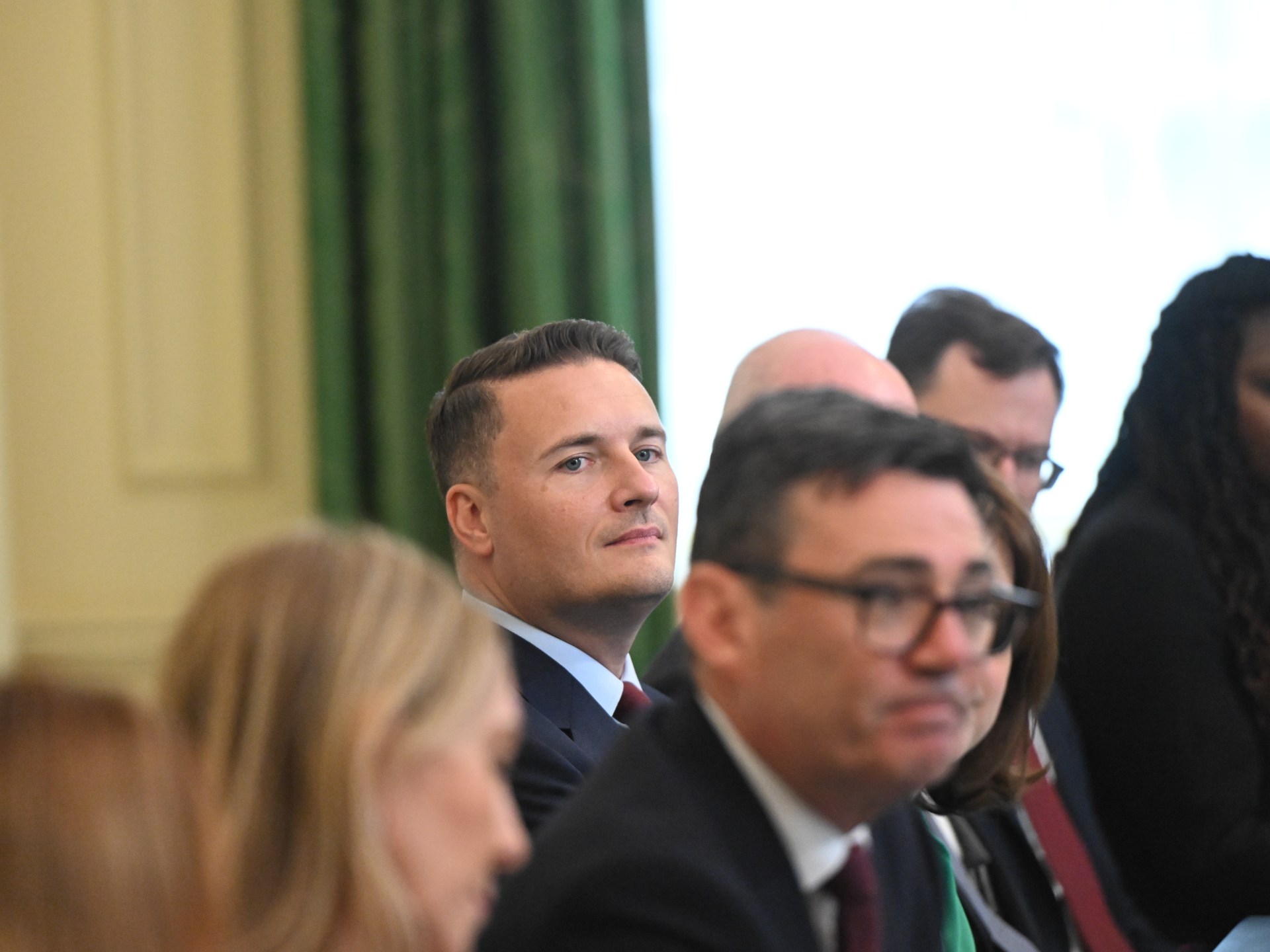
Those allies included Ed Miliband, hired as foreign secretary, and Wes Streeting, as defence secretary. The two men now hold the UK’s most internationally consequential portfolios, and both arrive with track records that give clues and raise questions about how they’ll approach them.
Here’s what you need to know:
Ed Miliband – who is he?
Born in 1969 to Polish Jewish immigrants; his father, Ralph, was a Marxist intellectual who fled Belgium during World War II.
Miliband has been an MP for Doncaster North since 2005, served in Gordon Brown’s cabinet alongside his brother, David (then foreign secretary), and led the Labour Party from 2010 to 2015. He held the energy and climate brief under Starmer until this week.

Miliband’s foreign policy record
Miliband’s defining intervention came in 2013 when he opposed military action against former Syrian leader Bashar al-Assad’s regime following a chemical weapons attack that killed hundreds of civilians in Ghouta near Damascus in 2013. His opposition to the Conservative government’s plan to bomb regime targets helped defeat the campaign in a key House of Commons vote, after which the United States also pulled back from the strikes.
Advertisement
Critics accused him of sabotaging efforts to stop al-Assad from committing further war crimes.
Challenged in March 2015 by Jeremy Paxman, a journalist known for his hard-hitting interviews, over whether he was “tough enough” to be prime minister, Miliband replied, “Hell, yes, I’m tough enough,” citing his refusal to back air strikes in Syria.
More recently, he reportedly pressed Starmer on recognition of a Palestinian state and was a key internal voice against UK involvement when the US and Israel attacked Iran in February – a refusal that drove a wedge between Starmer and US President Donald Trump.
Miliband has made no secret of his hostility towards Trump, which now complicates the UK’s “special relationship” with the US, which he must now manage.

Net zero: Miliband’s green credentials
Miliband was best known in recent years for championing the goal to make the UK achieve net zero carbon emissions by 2050 and decarbonising the country’s electricity grid so at least 95 percent of its power is generated from zero-carbon sources like wind, solar and nuclear power.
British media have reported that key allies of the new prime minister strongly opposed this policy, believing it would raise energy prices further in the short term at a time when Britons are struggling with a cost-of-living crisis.
Miliband also halted the issuing of new North Sea oil and gas exploration licences.
Trump has repeatedly criticised Miliband’s energy policies, saying the UK is wasting the “treasure chest” of oil and gas reserves in the North Sea by halting exploration.
Trump’s energy secretary, Chris Wright, has described the UK’s 2050 net zero target as a “sinister goal” and “lunacy”.
Wes Streeting – who is he?
Born in 1983, Streeting grew up in a council flat in Stepney in East London and was the first in his family to go to university, reading history at Cambridge before becoming president of the National Union of Students.
He worked in the charity sector on educational disadvantage, served as deputy leader of Redbridge Council, then won Ilford North in 2015 with the country’s biggest Conservative-to-Labour swing before rising up through shadow roles to become health secretary in 2024.

Streeting’s defence record
Streeting has essentially no defence background and, as a backbencher, he spoke about the UK’s defence policy sparingly.
Advertisement
Speaking to LBC Radio the day before Streeting’s appointment was confirmed, Richard Dannatt, former head of the army, said Streeting “knows pretty much the square root of nothing about defence”, arguing that removing Dan Jarvis, a former army officer, after six weeks would be a retrograde step.
A Labour Friends of Israel member for more than 20 years, Streeting followed the party line after Israel’s genocidal war on Gaza began in October 2023, declining to back a ceasefire and calling South Africa’s genocide case before the International Court of Justice a distraction.
However, as the war on the enclave dragged on, his public position shifted. By April 2025, he called Israel’s attacks on Gaza “intolerable” and by September said they were leading Israel to pariah status.
Texts to Peter Mandelson, the former ambassador to the US, sent in July 2025 and later made public went further still: Israel was committing war crimes “before our eyes”, he wrote, endorsing sanctions on the country.
However, he has rejected the term “genocide”, and antiwar groups, including Stop the War Coalition and the Campaign for Nuclear Disarmament, have called his defence appointment disgraceful.
He has also faced criticism for his move to use pro-Israel firm Palantir’s algorithms in the National Health Service. He has continued to defend that decision.