Trinidad And Tobago’s Gay Sex Ruling Exposes The Caribbean’s Unfinished Colonial Legal Legacy
 12 November 2026
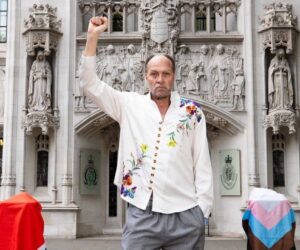


News Americas Now, PORT OF SPAIN, Trinidad, Thurs. Nov. 12, 2026: Trinidad and Tobago has just dismantled one of the Caribbean’s most enduring colonial-era restrictions on gay sex. But the decision came with an irony that reaches far beyond the immediate question of LGBTQ+ rights: the country had to turn to a London-based court, inherited from the British imperial system, to finally strike down a legal framework rooted in that same colonial past.
On November 10, the Judicial Committee of the Privy Council, Trinidad and Tobago’s final court of appeal, ruled that provisions of the country’s Sexual Offences Act cannot criminalize private, consensual sexual relations between adults of the same sex. The court allowed an appeal brought by Trinidad-born LGBTQ+ activist Jason Jones and concluded that sections 13 and 16 of the Sexual Offences Act infringed constitutional rights, particularly the right to respect for private and family life.
The ruling reverses a 2025 Court of Appeal decision and effectively restores the constitutional protection first recognized when Jones won his original High Court challenge in 2018. For Trinidad and Tobago, the judgment closes one chapter of a legal battle that began nearly a decade ago. For the wider Caribbean, it opens a much older question.
Laws criminalizing same-sex intimacy existed in Trinidad and Tobago long before independence, reflecting legal traditions imposed during British colonial rule. The modern challenge centered on provisions contained in the country’s 1986 Sexual Offences Act, including offences historically described as “buggery” and “serious indecency.”
The Privy Council concluded that those provisions could not constitutionally be applied to private, consensual same-sex relations between adults. It also ruled that the relevant protections for older laws could not be interpreted so broadly that entire areas of legislation became effectively immune from constitutional scrutiny.
That part of the judgment may prove especially significant across a region where constitutions inherited at independence frequently contained so-called “savings clauses.” Those clauses were designed to preserve existing laws during the transition from colonial rule to independence, preventing immediate legal vacuums. Decades later, however, critics argue that they have also helped preserve legislation rooted in colonial-era social and political assumptions.
The Trinidad ruling now puts renewed attention on that tension: when should laws inherited from empire continue to receive special protection from constitutional challenge?
There is another layer to the case. Trinidad and Tobago became independent from Britain in 1962 and a republic in 1976, yet its highest appellate court remains the Judicial Committee of the Privy Council in London. That meant one of the most consequential modern challenges to a colonial legal legacy was ultimately resolved through a judicial institution rooted in the former colonial power. For some Caribbean legal scholars and activists, that paradox is difficult to ignore. The case therefore intersects with another long-running regional debate: whether Caribbean states should continue sending their final appeals to London or move to the Caribbean Court of Justice, the regional court headquartered in Port of Spain.
Several Caribbean countries, including Barbados, Belize, Guyana, Dominica and Saint Lucia, have already adopted the CCJ as their final appellate court. Trinidad and Tobago has not. The Jones ruling is unlikely to settle that debate, but it gives it fresh context. If colonial-era laws continue to be tested against modern constitutional standards, Caribbean societies may increasingly have to ask not only what laws they want to keep, but also what judicial institutions should ultimately interpret them.
The Privy Council’s decision applies directly to Trinidad and Tobago. But it will almost certainly be studied elsewhere in the English-speaking Caribbean. Several Caribbean jurisdictions still retain laws criminalizing sexual activity between men, although their constitutional structures, legislation and appellate arrangements differ.
The judgment therefore does not automatically erase those laws elsewhere. What it does provide is a detailed constitutional argument against criminalizing private, consensual intimacy between adults and against interpreting savings clauses so broadly that old laws escape meaningful constitutional scrutiny. The Privy Council said such criminalization could not be justified in a society that properly respects individual rights and freedoms. That reasoning is likely to be closely examined by lawyers, activists, governments and courts across the region.
Jones has consistently argued that his challenge was about more than repealing a single criminal statute. The deeper issue is whether Caribbean societies continue to allow laws inherited from colonial rule to shape modern ideas about privacy, equality and personal freedom. That question extends beyond LGBTQ+ rights.
Across the region, debates over constitutional reform, criminal law, the death penalty, citizenship, judicial appeals and institutional independence continue to intersect with legal structures inherited from Britain. The Trinidad and Tobago ruling therefore represents more than the end of one prohibition. It forces a broader question into the open: more than six decades after independence, how much of the Caribbean’s legal order still reflects choices made under colonial rule – and how much of it has truly been remade by Caribbean societies themselves?
For Trinidad and Tobago, one colonial legal legacy has now been dismantled. For the rest of the region, the argument over what remains is far from finished.
Related News

Government Of Antigua and Barbuda Receives 20 Zeekr 7X Vehicles For CHOGM 2026

‘Half Way To Hell’: Guyana Opposition Leader Azruddin Mohamed Details Life In Lusignan...
Landslide: Dickon Mitchell’s NDC Wins 14 Of 15 Seats To Secure Second Term In Grenada El...