Oil-Rich CARICOM Nation Guyana Still Faces High Poverty Levels, Data Shows
 09 January 2026

News Americas, NEW YORK, NY: Guyana is making global headlines for its oil riches with investors rushing to the South American CARICOM shores and global media lavishing praise on it as the Caribbean’s newest economic success story. Massive offshore oil discoveries have transformed the small South American nation into one of the world’s fastest-growing economies, with billions of dollars in projected revenues and global investor attention. Yet, new regional poverty data highlights a sobering reality: Guyana remains the only CARICOM member identified among countries with the highest poverty incidence in Latin America and the Caribbean.
The contrast underscores a growing concern across the region – that rapid economic growth, even fueled by oil wealth, does not automatically translate into improved living conditions for the majority of citizens.
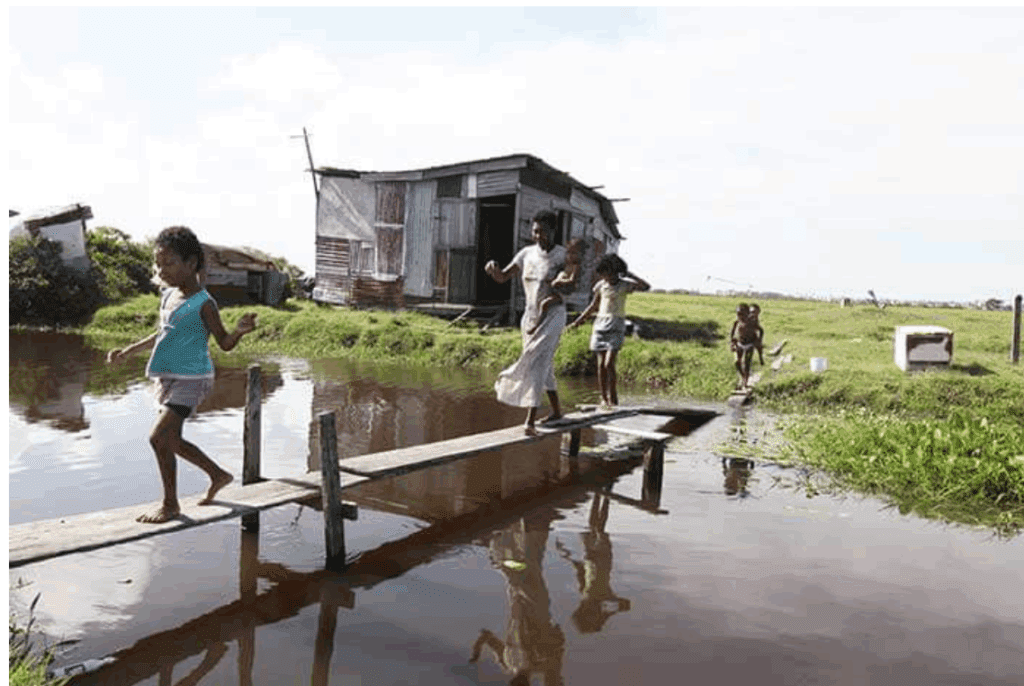
According to recent regional poverty analysis by Jillie Chang, David K. Evans, and Carolina Rivas Herrera and the Center For Global Development, using harmonized household surveys, more than half of Guyana’s population lives below the poverty line, with over 30 percent classified as extremely poor. These figures place Guyana alongside some of the poorest countries in the hemisphere, despite its oil-driven economic surge.
Much of the country’s poverty remains concentrated in rural and hinterland communities, where Indigenous populations are disproportionately affected. Limited access to infrastructure, education, healthcare, and formal employment continues to constrain opportunities – even as national GDP figures soar. Afro-descendants make up 3% of the population in poverty, while Indigenous people are not specifically mentioned in the extreme poverty group.
Households with children are more likely to be poor, with 35% of the population in extreme poverty being aged 0–15 years. The elderly (65+ years) make up 6% of the extreme poor population.The extreme poor in Guyana are more likely to work in agriculture compared to the non-poor.
- Poor households in Guyana have an average of 4 members, while non-poor households have 3 members.
- 25% of household members in extreme poverty are aged 0–14 years, 68% are aged 15–64 years, and 7% are aged 65+ years.
- 32% of the population in extreme poverty has access to sewerage connected to the network.
- 83% of the extreme poor have access to electricity.
- 79% of the extreme poor have access to piped water.
- 79% of the extreme poor have mobile phones, but only 1% have computers.
Economists note that this disconnect is not uncommon in resource-rich countries, particularly those undergoing rapid transitions.
“Oil wealth tends to be capital-intensive, not labor-intensive,” one regional development analyst explained. “That means GDP can grow dramatically while everyday livelihoods change very slowly.”
Guyana’s economy has expanded at record-breaking rates in recent years, driven primarily by offshore petroleum production. Government revenues have increased sharply, and the country has attracted new international partnerships.
However, poverty data suggests that economic growth alone has not yet reshaped household incomes in a meaningful way for much of the population. Many Guyanese continue to rely on informal work, agriculture, and subsistence activities — sectors that have not benefited directly from oil extraction.
Urban areas, including Georgetown, have seen rising costs of living, further straining low-income households. Housing affordability, food prices, and transportation costs have increased faster than wages for many workers.
Several long-standing factors contribute to Guyana’s high poverty levels:
- Geographic inequality: Remote interior regions face higher poverty rates than coastal and urban areas.
- Limited job creation: Oil revenues have not yet translated into widespread employment opportunities.
- Education and skills gaps: Many communities lack access to training aligned with emerging industries.
- Social protection gaps: Not all poor households are covered by cash transfers or targeted assistance programs.
The data also shows that poverty in Guyana is often chronic, meaning families remain poor for many years rather than experiencing temporary hardship. This makes upward mobility especially difficult.
Guyana’s experience carries broader implications for CARICOM and other resource-rich developing nations. It challenges the assumption that natural resource wealth alone can lift populations out of poverty without deliberate, inclusive policy choices.
As Guyana continues to expand its oil production, regional and international observers are watching closely to see whether revenues will be channeled into:
- Education and workforce development
- Rural infrastructure and connectivity
- Healthcare and social services
- Diversification beyond oil
The choices made now will shape whether Guyana’s oil boom becomes a foundation for shared prosperity — or another example of growth without equity.
Guyana stands at a critical crossroads. With unprecedented revenues flowing in, the country has a rare opportunity to reduce poverty, close inequality gaps, and build long-term resilience.
The data is clear: economic growth alone is not enough. For Guyana, turning oil wealth into lasting social progress will require intentional investment, transparency, and policies that prioritize people – not just production.
As the only CARICOM nation currently flagged for such high poverty levels, Guyana’s next chapter may become one of the most important development stories in the Caribbean.
Related News

Better Jobs, Not Just More Visitors, Will Shape The Future Of Caribbean Tourism – World ...
Caribbean Growth Outlook For 2026-2027
Caribbean Remittances By Major Countries: A Lifeline Powering Economies Across The Region