
Nepal rivals rally on final day of poll campaign, PM urges citizens to vote
 02 March 2026
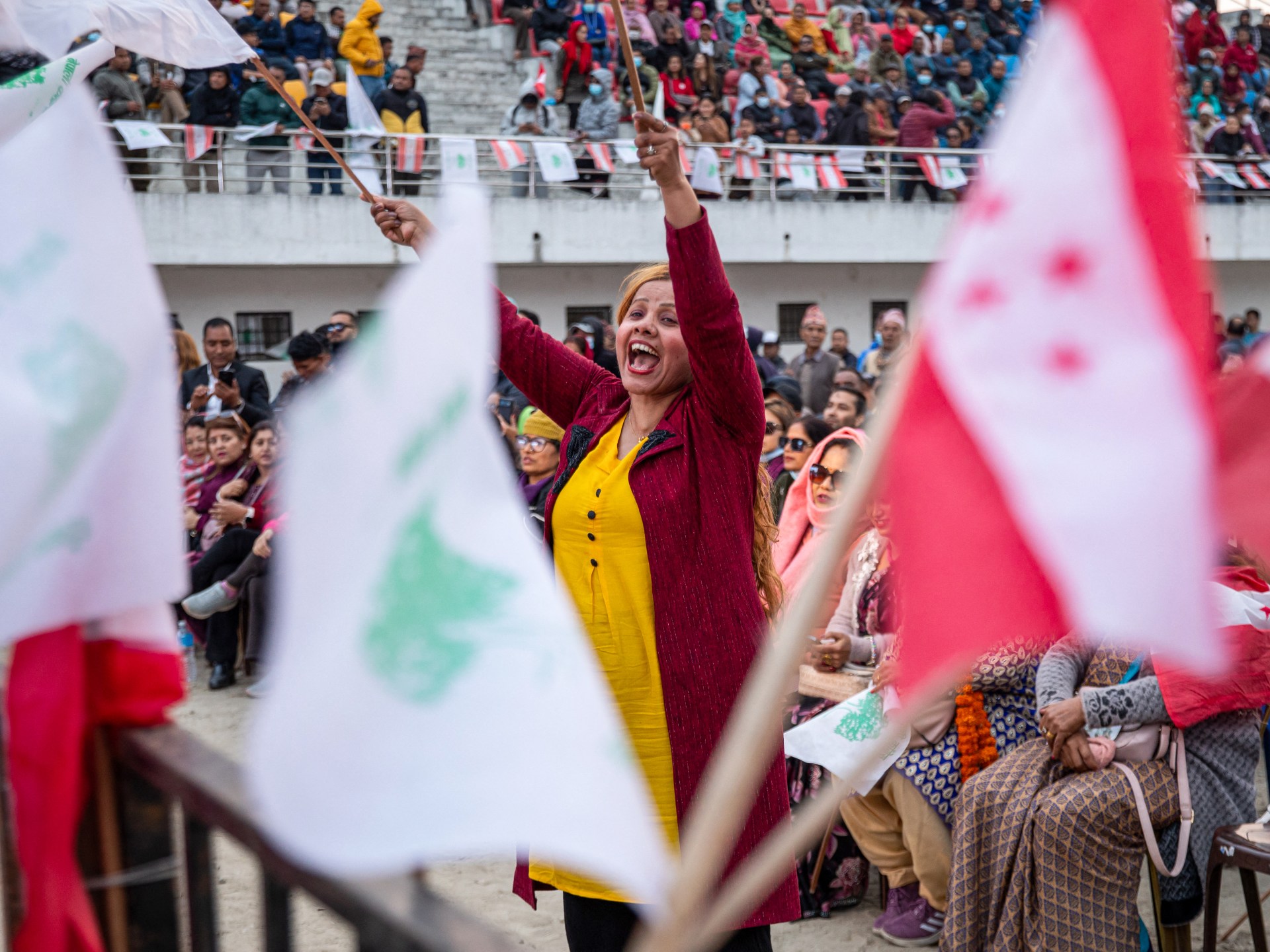

As Nepal’s rival parties make a last push on the final day of Nepal’s election campaign, interim Prime Minister Sushila Karki has appealed to people to vote and maintain peace.
The Himalayan republic will elect a new parliament on Thursday, replacing the interim government that has led the country of 30 million people since the September 2025 uprising, in which at least 77 people were killed.
- list 1 of 4Balen Shah: Rapper, mayor, Nepal’s next prime minister?
- list 2 of 4Nepal sets March 5 vote, restrictions eased as interim gov’t takes charge
- list 3 of 4Nepal protest leader says he will run in upcoming elections
- list 4 of 4The Gen Z digital uprisings
end of list
Two weeks of campaigning have showcased a wave of younger candidates promising to tackle Nepal’s struggling economy, challenging veteran politicians who have dominated for two decades, and promising stability and security.
“To move the country forward on the path of political stability and prosperity, all voters should participate in the upcoming elections,” Karki, a former chief justice, said in a television broadcast to the nation on Monday.
“I sincerely appeal to you to go to your polling station and vote on Thursday, even if you have to leave other work.”
She also pleaded for calm. “I request everyone to maintain peace and harmony during this election season,” she said. “It is only with your active participation that our democracy will survive.”

Referring to the election being held six months after the Gen Z-led protests, Karki said the situation was “complex, sensitive and challenging”.
“Our first duty was to manage that difficult transition, lead the country from the violent phase to a peaceful exit and return it to the path of the constitution,” she said, adding that the Election Commission had completed all preparations.
Advertisement
“The government of Nepal and the commission are fully committed to conducting the election in a fair, free and fearless manner,” she said.
Nearly 19 million people have registered to vote, including 800,000 likely to take part for the first time.
They will elect members to the 275-seat House of Representatives, the lower house, with 165 chosen via a direct vote and 110 through proportional representation.
More than 3,400 candidates are competing in the direct vote, 30 percent aged below 40 years.
Among the key figures is KP Sharma Oli, the 74-year-old Marxist leader ousted as prime minister last year.

He faces a high-profile challenge in his home constituency from former Kathmandu Mayor Balendra Shah, a 35-year-old rapper-turned-politician widely known as Balen.
Their constituency of Jhapa-5 – a mix of towns and farming settlements in Nepal’s eastern plains, with the world’s highest peaks on the horizon – has emerged as a crucial battleground.
Oli, speaking to the AFP news agency, blamed “anarchic forces” for the violence that led to his removal and denied ordering security forces to kill protesters during the unrest.
Shah, from the centrist Rastriya Swatantra Party (RSP), has cast himself as a symbol of youth-driven political change. “Gen Z’s number one demand is good governance, because there is a high level of corruption in the country,” he told AFP.

But he is not the only one wooing the youth vote and aspiring to be the prime minister.
Gagan Thapa, 49, the new head of the country’s oldest party, Nepali Congress, told AFP he wanted to end the “old age” club of revolving veteran leaders.
Thapa, a former health minister who took charge of the party in January, said he offers voters the “right mix of energy and experience”.
The last day of campaigning comes just before Holi, the Hindu festival of colours, with some candidates combining celebrations with their rallies.
Analysts say the vote is unlikely to deliver an outright majority for any single party.
Related News
Bill and Hillary Clinton set for Epstein deposition: What to know
Iranian missile strike on Israel’s Beit Shemesh kills nine people
Another US boat strike in Caribbean Sea kills three, Pentagon says