N Korea’s Kim oversees hypersonic missile tests, cites geopolitical crisis
 04 January 2026
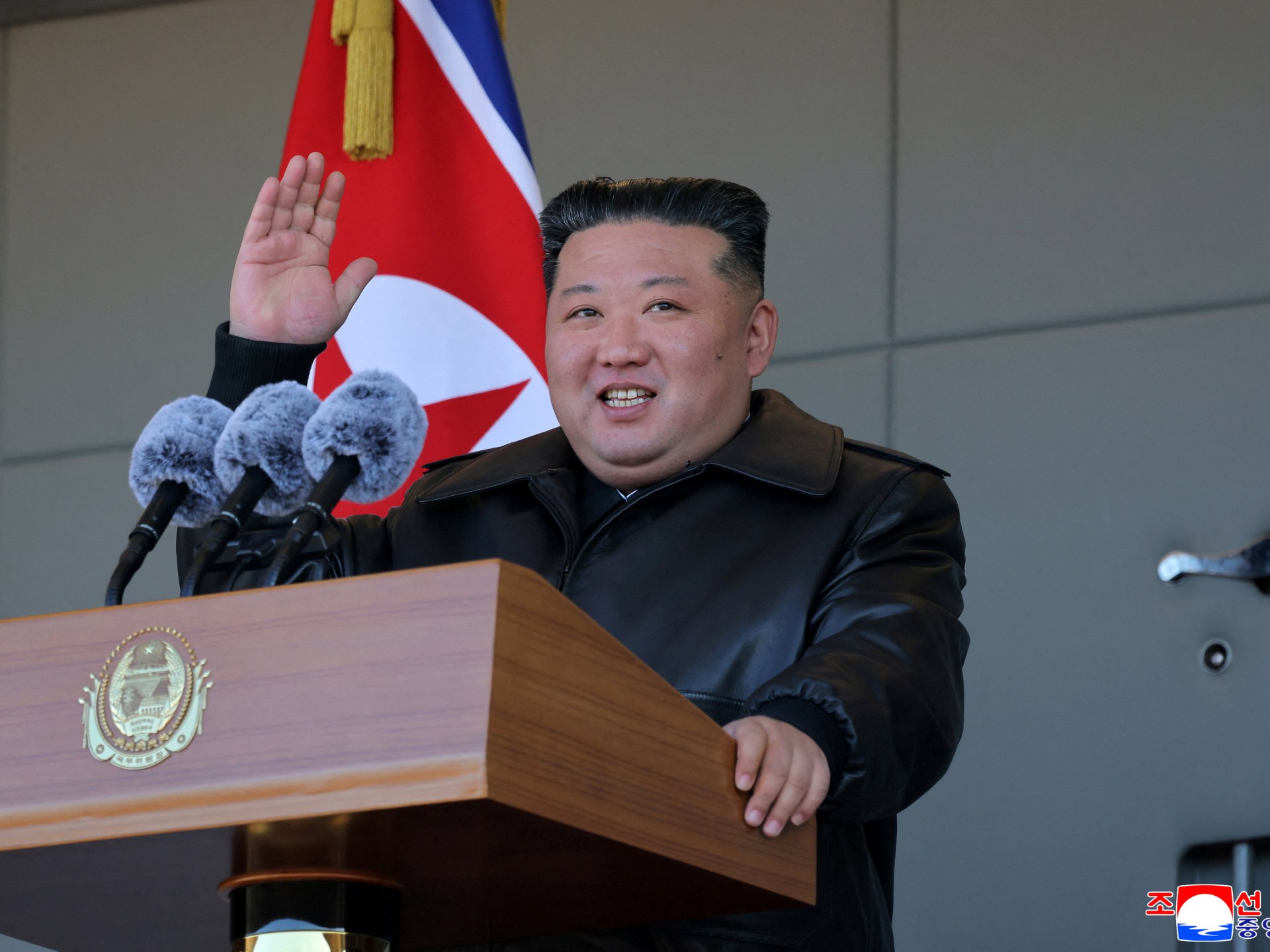

North Korea’s leader Kim Jong Un has overseen the test flights of hypersonic missiles, underscoring the need to bolster the country’s nuclear deterrent amid “the recent geopolitical crisis” and “complicated international events,” according to state media.
The Korean Central News Agency (KCNA) confirmed the drills on Monday, a day after North Korea’s neighbours said they detected multiple ballistic missile launches.
- list 1 of 4China urges US to ‘stop toppling’ Venezuelan government, release Maduro
- list 2 of 4North Korea fires missiles towards sea as South Korean leader visits China
- list 3 of 4South Korean President Lee to visit Beijing for pivotal 2nd summit with Xi
- list 4 of 4Kim Jong Un’s potential heir makes public visit to N Korean founder’s tomb
end of list
The tests came just hours before South Korean President Lee Jae Myung departed for China for a summit with President Xi Jinping.
The KCNA said that Sunday’s drill involving a hypersonic weapon system was meant to examine its readiness, enhance missile troops’ firepower operational skills and evaluate the operational capabilities of the country’s war deterrent.
“Through today’s launching drill, we can confirm that a very important technology task for national defence has been carried out,” Kim said, according to KCNA. “We must continuously upgrade the military means, especially offensive weapon systems.”
The missiles hit targets about 1,000km (621 miles) away, over the sea east of North Korea, KCNA said.
Kim added that “it’s a very important strategy to maintain or expand the strong and reliable nuclear deterrent”, because of “the recent geopolitical crisis and various international circumstances”.
The missile launch followed a North Korean statement on Sunday that denounced the attacks by the United States on Venezuela and its abduction of Venezuelan President Nicolas Maduro.
Advertisement
Pyongyang slammed the action as a “serious encroachment of sovereignty” and said it again showed “the rogue and brutal nature” of the US.
North Korea’s leadership has for decades justified its nuclear and missile programmes as a deterrent against alleged regime change efforts by Washington.
Hong Min, an expert on North Korea at the Korea Institute for National Unification in Seoul, wrote in a note on Monday that Pyongyang’s latest test was an apparent response to the US strikes on Venezuela. The missile appears to be the Hwasong-11, which was showcased at a parade in October, Hong said, citing his analysis of images published in state media reports.
Hong added that the Kim government is emphasising its ability to launch such missiles at any time, an effort to complicate US-South Korea’s missile defence system and prevent its preemptive interception.
The possession of a functioning hypersonic weapon would give North Korea the ability to penetrate the US and South Korea’s missile defence shields. In past years, North Korea has performed a series of tests to acquire it, but many foreign experts question whether the tested missiles have achieved their desired speed and maneuverability during flights.
In recent weeks, North Korea has test-fired what it called long-range strategic cruise missiles and new anti-air missiles. It has also released photos showing apparent progress in the construction of its first nuclear-powered submarine.
Observers say North Korea aims to demonstrate or review its achievements in the weapons development sector ahead of the ruling Workers’ Party Congress, the first of its kind in five years. Keen attention is on whether Kim would use the congress to set a new approach to relations with the US and resume long-dormant talks.
Separately, North Korea’s nuclear programme is expected to be discussed when Lee and Xi meet for a summit later on Monday.
Lee’s office earlier said he would call for China, North Korea’s major ally and economic pipeline, to take “a constructive role” in efforts to promote peace on the Korean Peninsula.
Related News

Countries demand Israel lift Gaza aid restrictions as Palestinians suffer
Americans evenly split on Maduro’s abduction, poll shows
Photos: Aftermath of US air strikes in Venezuela