Merz, Macron to address Munich Security Conference amid disputes with US
 13 February 2026
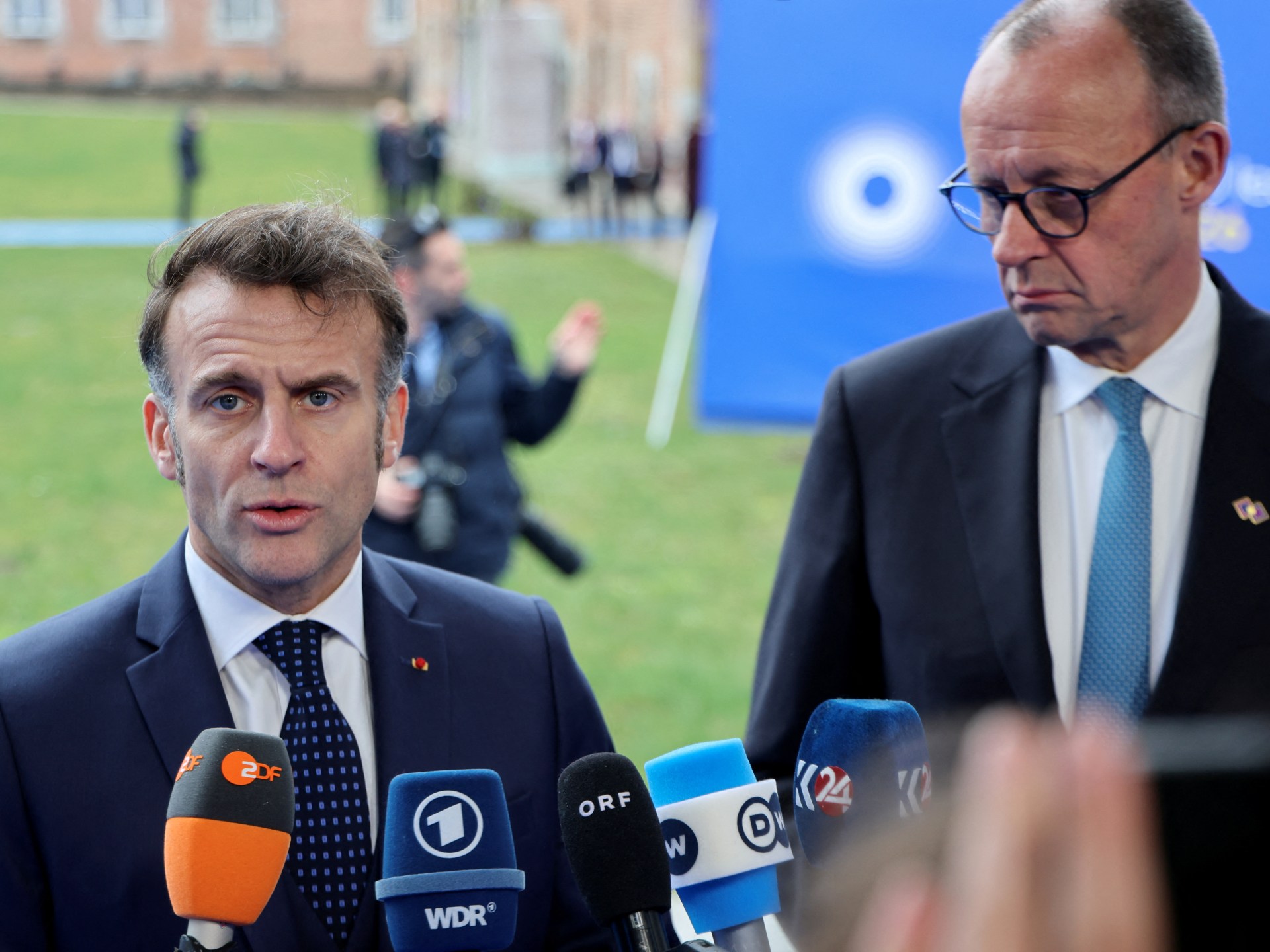

German Chancellor Friedrich Merz and French President Emmanuel Macron will deliver addresses on the first day of the Munich Security Conference (MSC), with Russia’s four-year war in Ukraine high on the agenda and amid strained ties between the United States and Europe.
Merz will open the conference at 1:45pm local time (12:45 GMT), while his French counterpart will close Friday’s official programme with a speech at 7pm (18:00 GMT), according to the MSC agenda.
- list 1 of 3Canada, France to open consulates in Greenland amid ongoing US threats
- list 2 of 3Macron warns US trade ‘threats, intimidation’ towards EU not over
- list 3 of 3US urges Europe to take the lead on defence in NATO
end of list
European Union foreign policy chief Kaja Kallas, Finnish President Alexander Stubb and British Foreign Secretary Yvette Cooper will also address the conference over the course of the day.
They are among more than 60 heads of state and government and about 100 foreign and defence ministers who have descended on the Bavarian southern German city amid high security, with about 5,000 police deployed for the event.
This year’s conference comes as relations between Europe and the US, their traditional allies and guarantors of the continent’s security for decades, are under immense pressure.
Since returning to the White House last year, US President Donald Trump has frequently criticised European countries for not sharing enough of the burden on common defence.
Ties plunged further last month when Trump stepped up threats to annex the Arctic island Greenland, an autonomous territory of NATO ally Denmark, forcing European nations to stand firm in protest, pushing back in a rare and concerted public rebuke of Washington.
Top of the agenda are issues on which the US has been leading diplomatic efforts: not only Russia’s war in Ukraine but also Iran’s nuclear programme and Israel’s genocidal war on Gaza, said Al Jazeera’s James Bays, reporting from Munich.
Advertisement
The mood ahead of this conference is “very different from years in the past,” said Bays.
“Diplomats I’ve spoken to since I was in Munich a year ago talk about the Munich moment, when US Vice President JD Vance” used the occasion to criticise European policies on immigration and free speech, said Bays, adding: his behaviour was “such a contrast with the past, when this was quite a cosy gathering, celebrating the transatlantic alliance.”
US Secretary of State Marco Rubio, “arguably a slightly more diplomatic figure” than Vance, arrived in Munich on Friday and will address the conference on Saturday, said Bays.
Before departing for Germany, Rubio said that transatlantic ties faced a “defining moment” in a rapidly changing world.
“The Old World is gone, frankly, the world I grew up in, and we live in a new era in geopolitics, and it’s going to require all of us to re-examine what that looks like and what our role is going to be,” he said.
Ukrainian President Volodymyr Zelenskyy also arrived on Friday and will speak at the annual gathering on Saturday, organisers said.
Zelenskyy is expected to discuss security with a string of European allies, including Rubio and Merz, ahead of the next round of US-brokered talks with Russia, which the Kremlin said would resume next week.
Related News
Trump, Petro to meet at White House after months of tensions
Venezuela’s Rodriguez signs oil reform law while the US eases sanctions
Italian court opens trial over deadly migrant shipwreck