

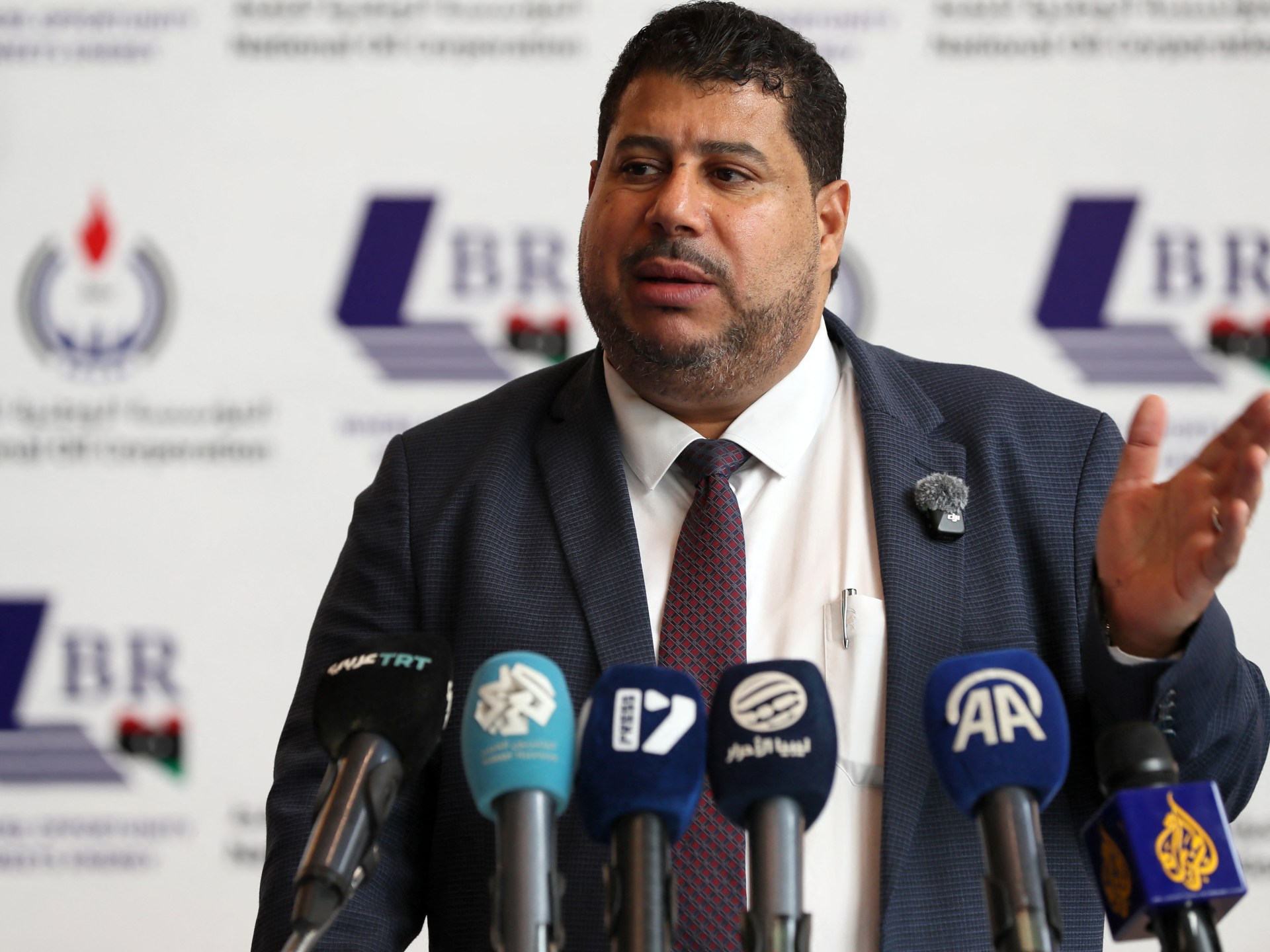

Libya has assigned new oil and gas exploration rights to foreign firms, aiming to revamp the sector after years of civil strife.
The country’s National Oil Corporation (NOC) announced the results of its first licensing round since 2007 on Wednesday. Winners included US oil giant Chevron and Africa’s largest privately-owned energy company, Nigeria’s Aiteo.
- list 1 of 3Only 13 survivors from capsized boat carrying 74 refugees off Libya
- list 2 of 3Venezuela has the world’s most oil: Why doesn’t it earn more from exports?
- list 3 of 3Can new Africa Energy Bank power a continent while protecting the planet?
end of list
Other winning bidders were consortia: Spain’s Repsol with British Petroleum, Eni North Africa with QatarEnergy, and Repsol with Hungary’s MOLGroup and Turkiye Petrolleri.
The licensing awards signal some renewed interest in Libya’s oil sector, which foreign investors had long been wary of after the country erupted into conflict in 2011 with the overthrow of longtime ruler Muammar Gaddafi. But experts said the response was smaller than expected.
“It is likely that lingering uncertainty over Libya’s political dysfunction and insecurity in the areas around the blocks on offer were factors in the underwhelming response,” Hamish Kinnear, an analyst with UK-based risk consultancy Verisk Maplecroft, told the AFP news agency.

Libya remains politically divided between rival administrations in the east and west, and disputes over the central bank and oil revenues often disrupt production at key oil fields.
Advertisement
The licensing round, in which five of 20 blocks on offer were awarded, follows a $20bn deal last month with France’s TotalEnergies and ConocoPhillips to boost oil production over 25 years.
Prime Minister Abdelhamid Dbeibah, who announced the deal, said the goal was to increase daily oil production by 850,000 barrels within that timeframe. Libya currently produces approximately 1.4 million bpd.
The round used a new, more investor-friendly contract model to replace the rigid terms that previously deterred investment.
NOC chief Masoud Suleman said a committee will be created to further “improve the terms” of the bidding system and negotiate with candidates to grant unallocated blocks.
Speaking at the bid’s announcement ceremony, he said “a return of trust and resuming institutional work in one of the country’s most important sectors after a long period of pause and challenges.”
“They are part of a broader national path that aims for prosperity, growth, the return of normalcy,” he added.
Related News
Is Trump’s ‘Board of Peace’ an effort to curtail Europe’s middle powers?
Iran delegates import powers as US war threats keep economy unstable
Japan’s Sanae Takaichi tipped for big win as polls open in snap elections