
How Hezbollah’s fibre optic drones test Israel’s sophisticated radar system
 29 April 2026
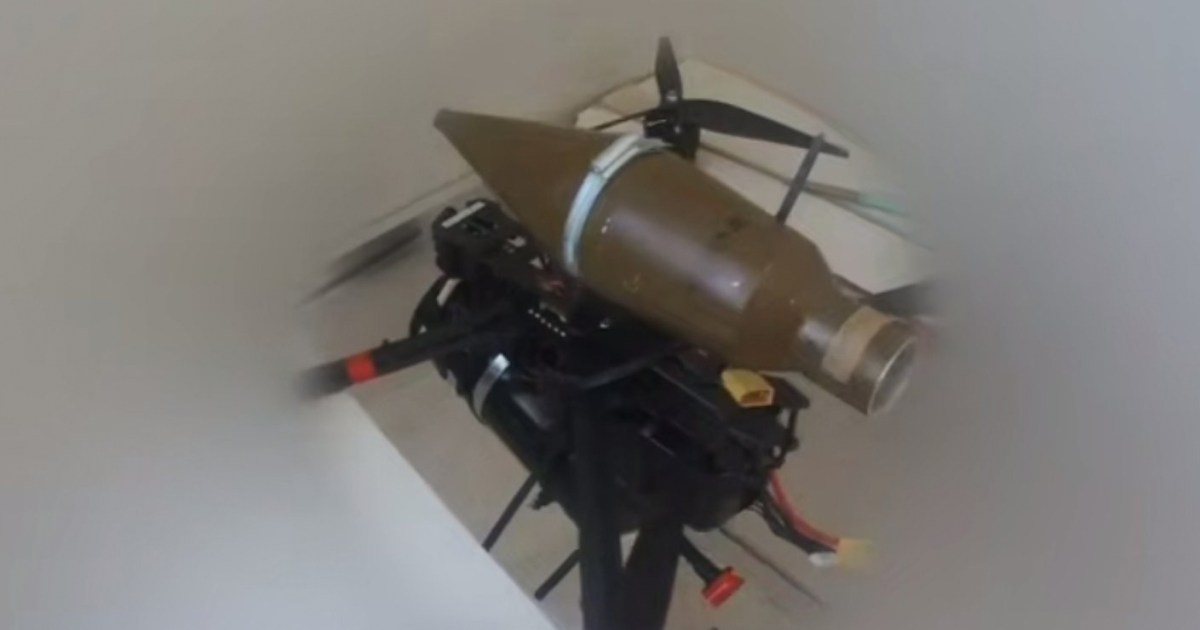

In the skies over the Lebanese town of Taybeh, Israel’s multibillion-dollar defence systems were rendered useless by a spool of cable, according to a report by the Israeli daily Yedioth Ahronoth (Ynet).
As an Israeli medical evacuation helicopter rushed to rescue soldiers wounded in a drone attack, another unmanned aerial vehicle (UAV) hurtled towards them. With their electronic countermeasures failing, soldiers on the ground were forced to point their rifles at the sky, firing at the incoming threat before it detonated just metres away.
The chaotic scene underscores a lethal new reality in the escalating conflict. The Lebanese group Hezbollah has introduced a new weapon to the battlefield: first-person view (FPV) attack drones guided by a physical fibre optic cable.
The ‘unjammable’ threat
Unlike traditional drones that rely on radio frequencies or satellite signals, these modified aircraft are tethered directly to the operator’s control station by a fibre optic thread. The cable can extend between 10–30km [6.2 to 18.6 miles], allowing the drone to reach distant targets.
Because there is no wireless signal to intercept, the drones are immune to Israel’s sophisticated electronic warfare (EW) jamming systems. Furthermore, the aircraft are constructed from lightweight fibreglass, meaning they emit almost no thermal or radar signature.
Hassan Jouni, a military analyst, noted that this renders traditional early-warning systems blind.
The drones have even managed to bypass the “Trophy” active protection system installed on Israeli Merkava tanks, which is designed to detect and intercept incoming projectiles.
Advertisement
Aided by high-resolution optical cameras that transmit uncompressed video through the cable, Hezbollah operators can manually steer the drones into specific vulnerabilities, such as a tank’s turret or tracks.
Improvised nets and deep frustration
The lethal potential of this technology was demonstrated clearly during the recent attack in Taybeh. An explosive-laden fibre optic drone slammed into an Israeli armoured unit, killing Idan Fooks and wounding six other soldiers, Ynet reported. When the helicopter arrived, Hezbollah launched two more drones, one of which exploded just metres from the aircraft.
The inability to stop these attacks has caused deep frustration among front-line Israeli commanders, according to reports by Israeli military correspondent Doron Kadosh.
“There isn’t much to do about it,” one Israeli commander currently in Lebanon told Kadosh. “The briefing the forces get amounts to: ‘Be alert, and if you spot a drone, shoot at it’.”
In the absence of a systematic military solution, Kadosh reported that some Israeli combat units have begun independently developing improvised defences, such as hanging physical nets over military positions, houses and windows in the hope that the drones will get tangled up in it before detonating.
“It’s an improvised response… but it’s far from enough,” one Israeli officer told the correspondent. Senior Israeli military officials acknowledge they entered the war in Lebanon without sufficient tools to counter this threat, despite having ample time to prepare after similar tactics were deployed in the Russia-Ukraine war and by Palestinian fighters in Gaza on October 7, 2023.
A deadly tactical shift
The tactics mirror battlefield developments in Ukraine, where both sides have increasingly relied on tethered drones to operate in heavily jammed environments, the Ynet noted. Assembled and modified in workshops across southern Lebanon, Hezbollah’s drones are fitted with anti-armour shaped charges, offering a cheap and precise alternative to conventional antitank missiles.
However, the technology is not without flaws. Nidal Abu Zaid, a military analyst, explained that the lightweight fibreglass bodies make them highly vulnerable to poor weather, such as heavy rain and strong winds. Additionally, the thin fibre optic cable can easily snap if the drone flies into a physical obstacle like a tree or large bush.
Despite Israel’s overwhelming aerial superiority, troops on the ground find themselves facing an asymmetric nightmare: an advanced military forced to use assault rifles and window nets to fight off a low-cost fibreglass drone, guided by a simple wire, that no radar can see until it is too late.
Advertisement
Related News
US, Iran exchange threats as fragile ceasefire set to expire

Milei administration in Argentina blocks journalist access to Casa Rosada

‘Whose is he?’: A Gaza father’s fight for a child who might not be his