
Houthi advance on Aden may spur resurgence of Yemen’s southern separatists
 17 November 2026
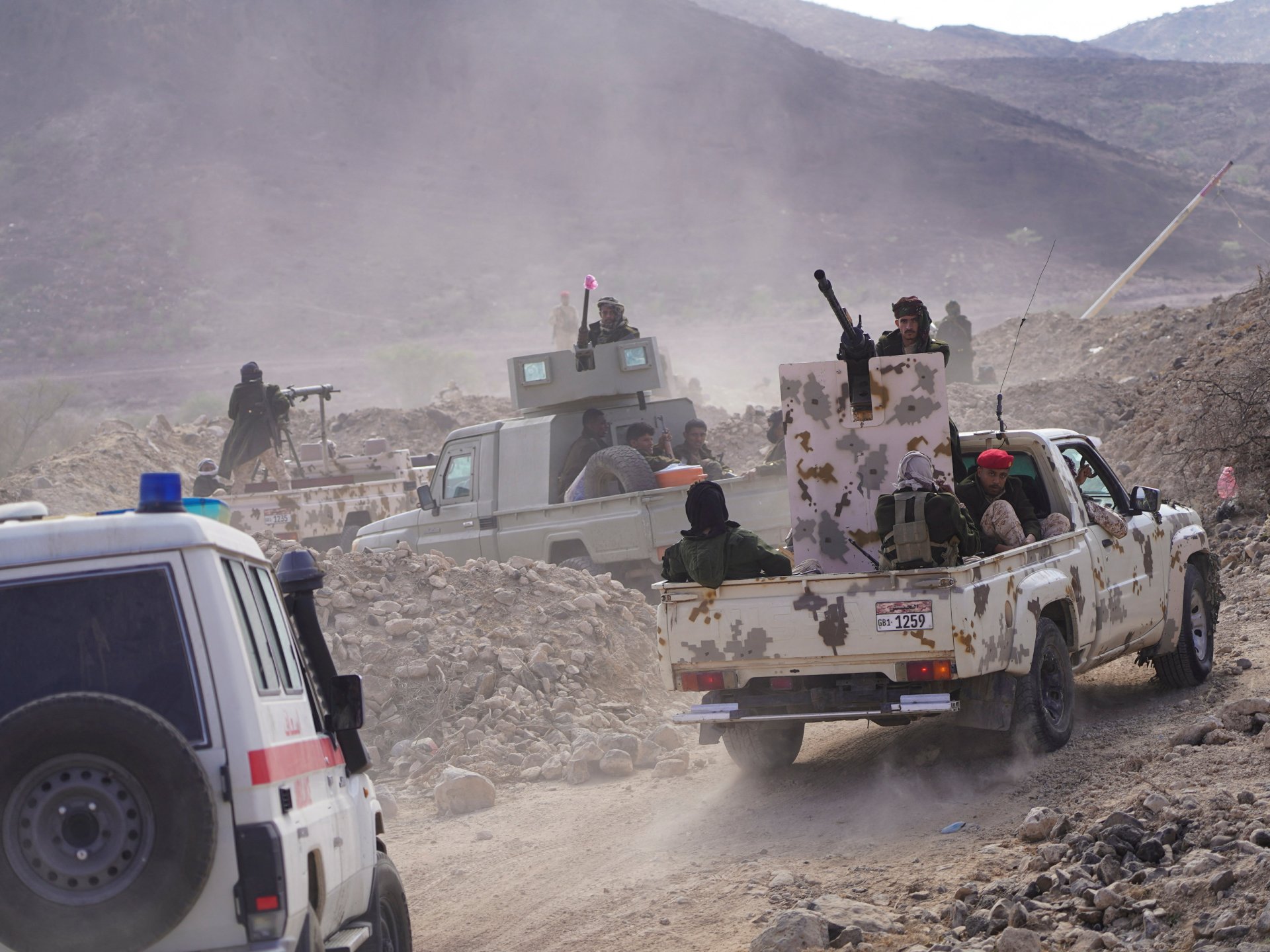

A looming Houthi military threat to the Yemeni government’s de facto capital of Aden has increased the importance of the Southern Transitional Council (STC), a southern secessionist movement, analysts have said.
The STC, which is believed to be supported by the United Arab Emirates, seeks an independent state for southern Yemen. An announcement that it had disbanded was made at the start of the year, following a Saudi-backed military campaign by Yemeni government forces against it. Other STC senior members declared the dissolution “null and void”, but the group had remained weakened in the months since.
- list 1 of 3Is the US-Israel war on Iran turning into a ‘frozen conflict’?
- list 2 of 3Yemeni army reports 661 attacks on Houthis as group advances towards Aden
- list 3 of 3Saudi Arabia dismisses commander of coalition forces fighting Houthis
end of list
However, following the sudden withdrawal of forces aligned with the internationally recognised Yemeni government from key positions on Yemen’s Red Sea coast this week, southern separatists now appear poised to gain more influence in the south.
With the Houthi group, also known as Ansar Allah, now 60km (37 miles) from the southern city, factions linked to the STC have stepped up to defend Aden from the Houthi advance.
Amr al-Bidh, a special representative for the STC president, has blamed the collapse of government forces on Yemen’s Red Sea coast in September, as well as recent Houthi gains, on the government campaign against the southern separatists earlier this year.
“In January, the most effective anti-Houthi force in Yemen was taken apart by decisions in Riyadh, not by the Houthis,” al-Bidh told Al Jazeera.
STC leader Aidarous al-Zubaidi, who is believed to be based in the UAE and has maintained his distance from the Yemeni government, recently launched a mobilisation campaign across the south to prepare for the defence of Aden, Lahij and al-Dhalea.
Advertisement
Al-Bidh said that for the STC to stop the Houthi advance, it would require autonomy on the battlefield for its units.
“No front can be held for long when the people defending it have no say in how it is defended. What’s missing is a political decision to let southerners lead their own defence. We’re ready to put every capacity we have towards defending Aden,” al-Bidh said.
“We’ve always said the war will only end with a political solution that deals with the root of the conflict. That includes the right of the southern people to decide their own future. What won’t work is a deal made over the heads of southerners and signed by people who don’t represent them.”
Abdy Yeganeh, policy director for Independent Diplomat, said the STC could serve as a major bulwark against the Houthis during their current offensive.
“As a result of the January fallout between Saudi Arabia and the STC, the STC forces were weakened and undermined,” Yeganeh told Al Jazeera.
“Events in recent weeks have shown that despite attempts of marginalising the STC, they remain a credible local entity with significant popular support, with tens of thousands marching weekly across the south in their favour and with a capable military.”
But military and strategic affairs expert Ali al-Dahab said that the STC remains politically divided and sections have become highly dependent on Saudi financial support.
“Without the support of the government and the support of Saudi Arabia, it cannot [repel the Houthis],” al-Dahab told Al Jazeera. “The capabilities of the Houthis have exceeded the combined capabilities of the government, let alone the [Southern] Transitional Council.”
The STC and Yemeni government forces have fought together against the Houthis, who captured Sanaa in September 2014. But relations between the two sides have also been fraught with differences, including clashes for control of positions and facilities in Aden and southern Yemen.
Following STC advances in southern Yemen in December 2025, the Saudi-led coalition, which has militarily supported the Yemeni government since March 2015, launched air strikes on an alleged UAE-linked weapons shipment to southern separatists. Al-Zubaidi fled Yemen, and some STC units came under the command of Saudi-backed forces. One of the most powerful forces affiliated with it, the Southern Giants Brigades, is now aligned with Saudi Arabia.
Saudi Arabia’s King Salman issued a royal decree on Monday replacing Lieutenant General Fahd bin Hamad al-Salman with General Fayyad al-Ruwaili as the commander of its forces fighting the Houthis.
Advertisement
Al-Dahab said that appointing al-Ruwaili, Saudi Arabia’s chief of the general staff, to this role centralises decision-making in the face of a Houthi offensive.
“It gives the position greater power because whoever will assume command of the joint forces is the Saudi Chief of Staff,” al-Dahab said.
Related News
No clear winner in Israeli election with nearly 90 percent of votes counted
US bank outage: What caused Chase problems and Zelle payment delays?
Iraq deploys army to stronghold of Iran-backed Kataib Hezbollah