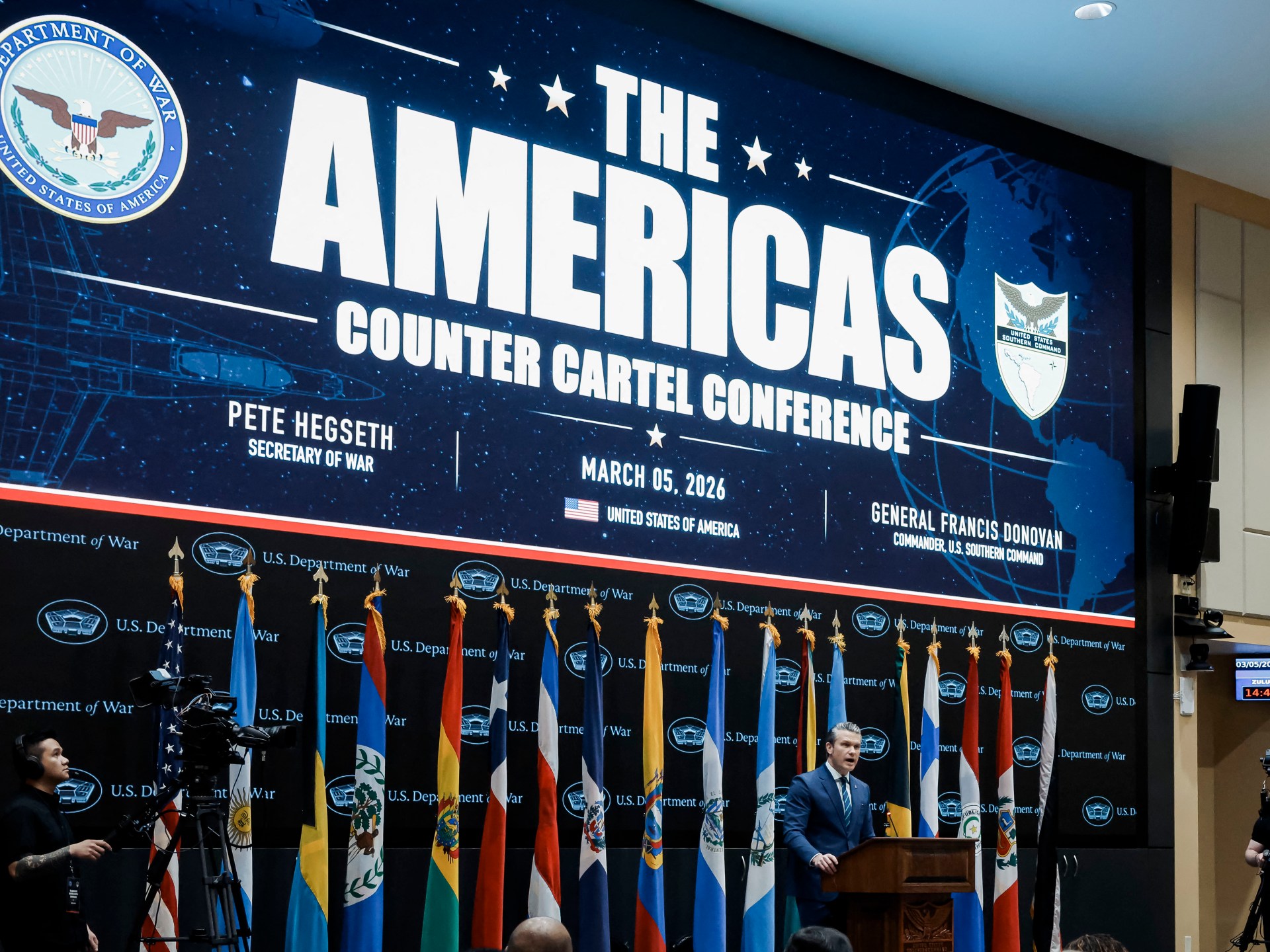

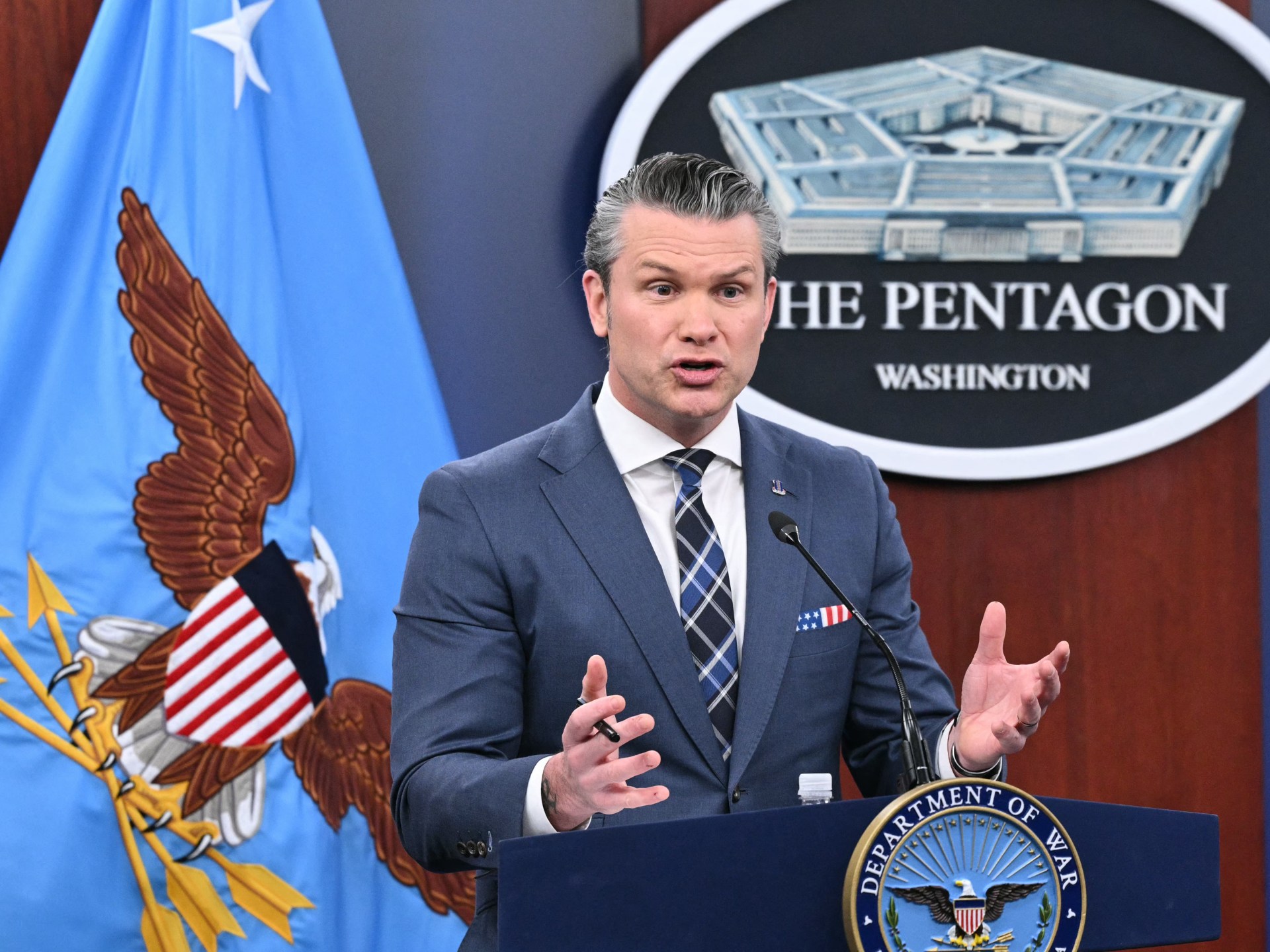

The Pentagon is seeking an additional $200bn from Congress to fund the United States-Israel war with Iran, a conflict Defense Secretary Pete Hegseth warns has no “timeframe” for ending.
Asked about the figure on Thursday, Hegseth did not directly confirm the amount but said that it could change.
- list 1 of 3US East Asian allies in legal quandary as Trump seeks help in the Middle East
- list 2 of 3What did Arab and Muslim ministers discuss in Riyadh meeting on Iran?
- list 3 of 3Why are Iran’s South Pars gasfield, Qatar’s Ras Laffan, so significant?
end of list
“As far as $200bn, I think that number could move. Obviously, it takes money to kill bad guys,” Hegseth said. “We’re going back to Congress and folks there to ensure that we’re properly funded for what’s been done, for what we may have to do in the future.”
The Associated Press and Washington Post reported that the US Department of Defense had requested the sum from the White House.
It’s an extraordinarily high number and comes on top of extra funding the Defense Department already received last year as part of President Donald Trump’s July tax-cuts bill. Such a request would need to be approved by Congress, and it is not at all clear that such spending would have political support.
Congress has been bracing for a new spending request, but it is not yet clear whether the White House has transmitted the proposal for a war that Hegseth declined to provide a timeline for ending.
“We wouldn’t want to set a definitive timeframe,” Hegseth told a news conference, adding that “we’re very much on track” and that Trump will be the one to decide when to stop.
“It will be at the president’s choosing, ultimately, where we say, ‘Hey, we’ve achieved what we need to.'”
Congress, however, has not authorised the war and is showing growing unease with the military operation’s scope and strategy.
Congress is controlled by the president’s Republican Party, but many of the more conservative lawmakers are also fiscal hawks, with little political appetite for big spending, on military operations or other matters. Most Democrats are likely to reject such a request and demand more detailed plans for military strategy and goals.
Advertisement
The requested amount would be a sizable boost to the Pentagon’s annual budget, which Congress approved at more than $800bn for the current fiscal year.
That is on top of some $150bn that Congress gave the Defense Department in last year’s tax-cuts bill, much of it for specific projects and overall upgrades to the Pentagon’s operations.
While some of the military’s biggest champions on Capitol Hill have welcomed new spending as a way to upgrade the US defence capabilities in the face of emerging threats, others will certainly point to healthcare and other domestic needs that they view as more important priorities.
Top US military officer General Dan Caine, who spoke alongside Hegseth, provided details on weapons being used against Iran and its allied forces in the region.
Caine said A-10 Warthogs – a type of aircraft designed for providing close air support – are “hunting and killing fast-attack watercraft” in the Strait of Hormuz waterway, a key trade artery which Iran effectively closed to maritime traffic following the start of the war.
He also said AH-64 Apaches are being used in Iraq to target Iran-aligned militia groups there, and that some US allies have begun using the attack helicopters to counter one-way drones launched by Tehran’s forces.
Related News

Analysts say US threat of ‘no quarter’ for Iran violates international law

Kurdish opposition mulls whether to trust Trump after Iran uprising call
Afghanistan says children among four killed in latest attacks by Pakistan