
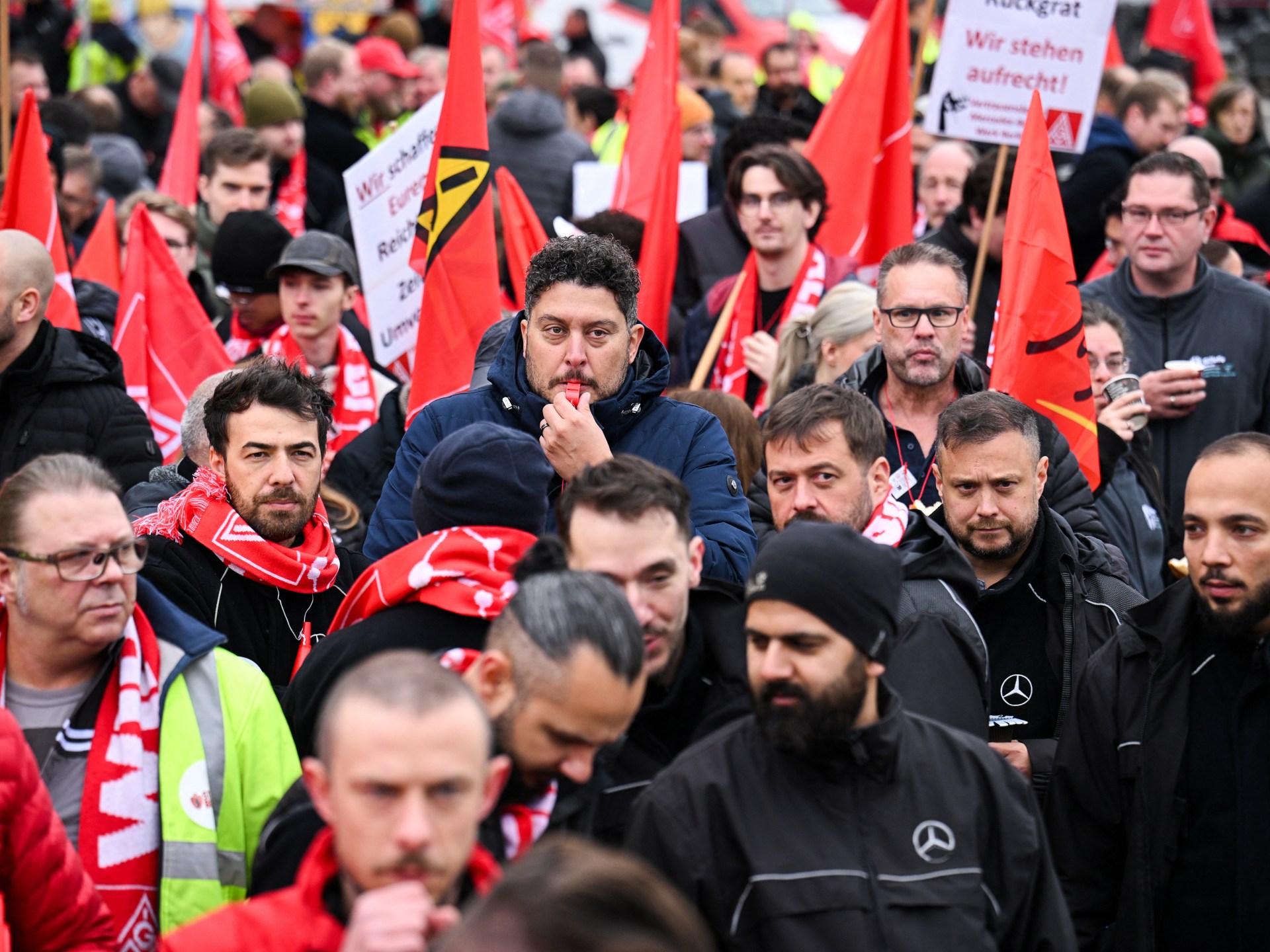

Germany’s largest union has launched a wave of strikes as it pushes for higher wages and increased job security.
The walkouts on Monday escalated a wage dispute affecting about 3.7 million employees in Germany’s metal and electrical engineering industries. The expanded industrial action comes amid myriad strikes and protests across Europe over the cost of living and conditions in workplaces and educational facilities, several of which have seen severe unrest.
Major manufacturers including Audi, Mercedes-Benz and Tata Steel were affected by the strikes launched by the IG Metall union. The union is calling for a 5 percent pay rise amid cost-of-living pressures, as well as measures to protect jobs and production sites, and profit-sharing arrangements in sectors performing strongly.
Employers have proposed a one-off payment equivalent to 1 percent of pay in July 2027, followed by a 1.3 percent wage increase from July 2028. The proposal would allow companies facing financial difficulties to withhold the one-off payment.
IG Metall rejected the offer, saying it would amount to a pay cut in real terms, and called for the expansion of the industrial action.
Strikes are expected to continue throughout the week. The union plans to release participation figures on Friday. During the previous bargaining round in 2024, more than 100,000 workers took part on peak days.
The cost of living, housing costs, and education policy have provoked demonstrations across Europe in recent weeks. Students and unions have led mass rallies, and unrest has rocked Belgium, France and Spain among other countries.
Advertisement
The wave of protest reached Germany over the weekend, with thousands of people rallying in Berlin and more than 30 other German cities on Saturday.
Related News
Al Jazeera marks 30th anniversary with network overhaul
Trump suggests those who leak government information should ‘be shot’

Activists accuse Israeli settlers of assault in occupied West Bank