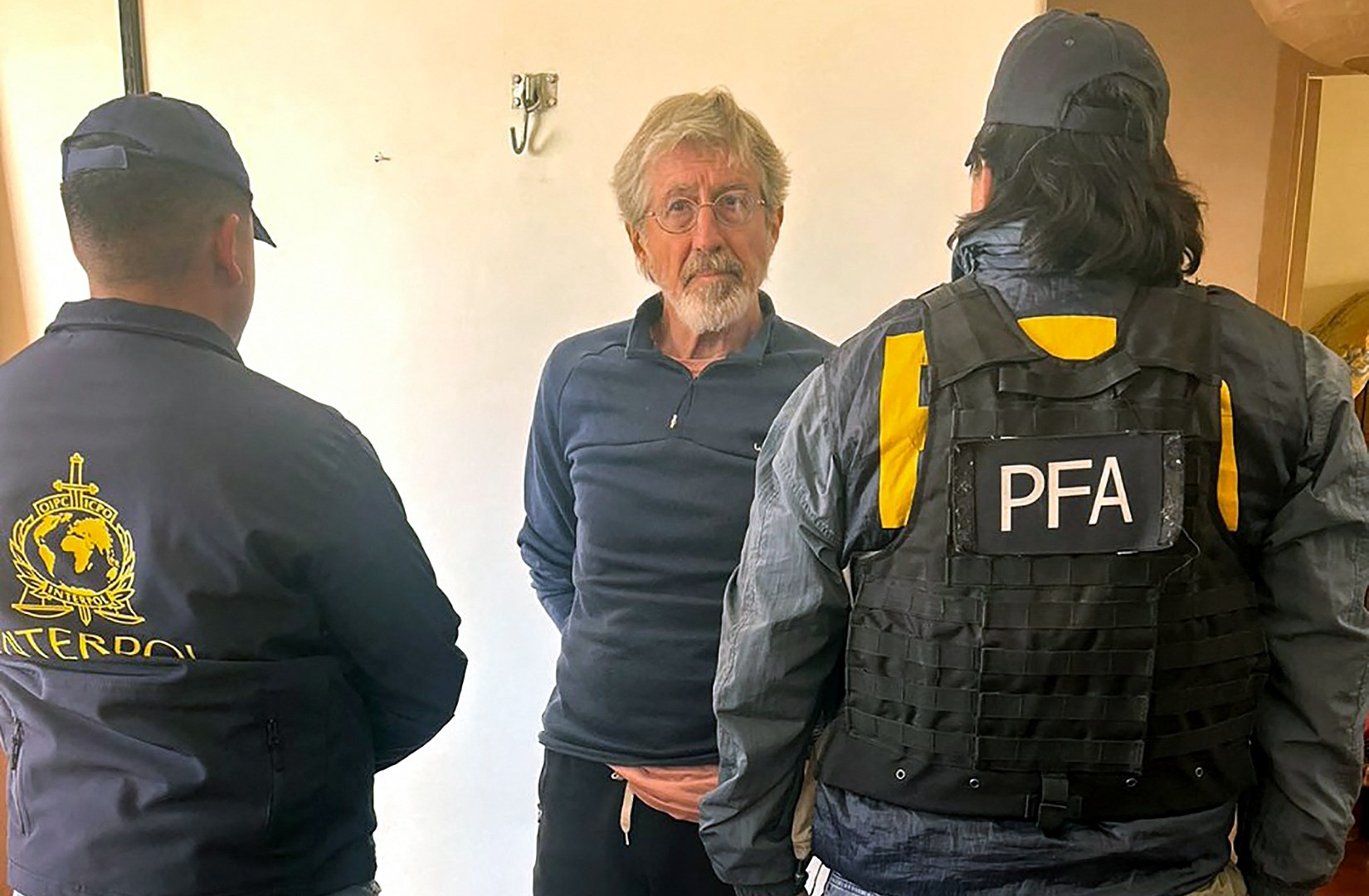

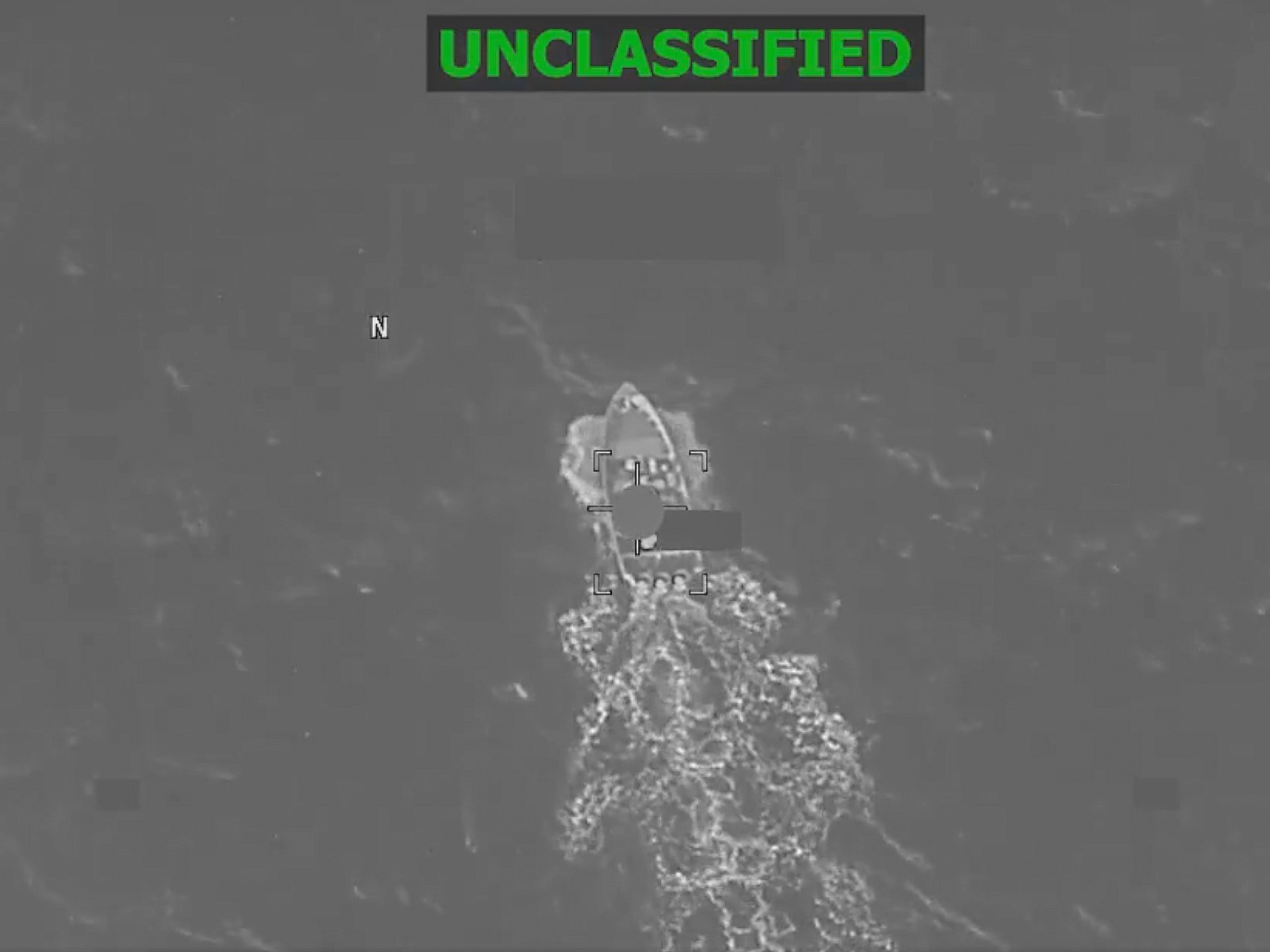

A group of fishermen from Ecuador have sued the administration of United States President Donald Trump over a drone strike that sank their vessel and injured members of their crew in March.
The lawsuit, filed on Monday in a Pennsylvania federal court, seeks financial restitution and any additional relief the court considers just.
- list 1 of 3Families of Trinidadian men killed in US boat strike demand accountability
- list 2 of 3Why is the US sanctioning the International Criminal Court?
- list 3 of 3US says it killed five people in strike on alleged drug boat
end of list
It also petitions the court to issue an order ending the Trump administration’s campaign of strikes targeting alleged drug trafficking boats in the Caribbean and eastern Pacific.
The complaint centres on the March 17 sinking of the fishing boat La Negra Francisca Duarte II, based in Ecuador.
“We filed the lawsuit because the boat was all we had. Nobody in Ecuador is helping us,” the ship’s captain, Hernan Flores, told the Reuters news agency. “They did all that damage to us, and by the grace of God, we’re alive.”
The government has not claimed responsibility for the strikes on La Negra Francisca Duarte II and two other Ecuadorian vessels that were attacked and sunk in recent months.
A report from the Washington Post in August, however, suggested that the vessels were targeted by the CIA as part of a secret overseas mission.
Other reports have raised the possibility of the attacks being conducted by a US government contractor or a regional ally.
The attacks appear to be similar to an ongoing campaign the US military has claimed credit for.
Since September 2025, the US government has publicly undertaken a series of boat strikes, with the aim of killing alleged “narcoterrorists”.
Advertisement
At least 244 people have been killed as part of that campaign, which experts have described as extrajudicial killing, in violation of international law.
The lawsuit filed on Monday alleges that two drones were launched from a vessel operated by the US in March and proceeded to attack La Negra Francisca Duarte II.
The boat was set ablaze, resulting in “serious burns” for two of the 16 crew members.
“All of the Plaintiffs ended up jumping off the ship and into the sea. They then found their way onto small emergency boats,” the filing said, calling the strike part of an “unprecedented and manifestly unlawful US military campaign”.
After the strike, the crew members say they made their way towards what they believed was a tuna fishing boat nearby but were met by armed men speaking English dressed in military uniforms.
Since Trump returned to the White House in 2025, he has launched a hardline campaign to combat drug trafficking into the US.
That push has coincided with a policy of expanding US military operations across Latin America, often in collaboration with right-wing political allies in the region.
But critics have raised concerns over transparency and potential rights abuses during such operations.
No suspects have been identified in the boat strike campaign undertaken by the US military, for instance, nor has any evidence been presented to the public.
Families, however, have stepped forward to claim the dead as their loved ones. Many have argued that the people killed in the boat strike campaign were not drug traffickers but fishermen and informal workers.
In December 2025, the family of the missing Colombian fisherman Alejandro Carranza filed a complaint about the boat strikes through the Inter-American Commission on Human Rights, claiming his right to life had been violated.
A few weeks later, in January, the families of two workers from Trinidad and Tobago – Chad Joseph and Rishi Samaroo – filed a wrongful death lawsuit in a US federal court in Massachusetts. The men had reportedly been travelling home from Venezuela after taking work abroad.
But experts say that efforts to hold the US government to account will be difficult, given the lack of transparency surrounding the boat strikes.
The lethal boat strike campaign has continued in recent weeks, with a recent attack taking place on October 27.
The US government has also been involved in non-lethal interception efforts, stopping suspected drug-trafficking boats.
The watchdog group Human Rights Watch said that the US and Ecuador intercepted at least eight vessels between late August and mid-September, on the basis that they were being used to supply drug trafficking groups.
Advertisement
Of the 160 crew members on board those vessels, Human Rights Watch says that 56 were released without charge by court order, 40 were acquitted for lack of evidence, 50 are awaiting trial, and 14 were not formally charged.
Related News
From Italy to Canada, how the UK’s Palestine Action group went global

Pope condemns murders of Peru’s Indigenous leaders, deforestation of Amazon
Is Iran plotting a ‘dirty bomb’ attack in the US? What we know