

Italy has denounced Ukraine for carrying out attacks against Russian vessels in Libyan waters, saying it was wrong to “violate Libya’s sovereignty”.
Rome’s rebuke marks a crack in its relationship with Ukraine, which Italy has largely supported since Russia’s full-scale invasion in 2022, including with military assistance.
Recommended Stories
list of 3 items
- list 1 of 3Russian strikes on Ukraine kill five, cause power outages in five regions
- list 2 of 3Ukraine says five jets damaged in attack on Russia’s Savasleyka airbase
- list 3 of 3Is Libya a new front in the Ukraine war?
end of list
It coincides with growing concern about the involvement of foreign powers in a divided Libya, as well as the risk of other nations being drawn into the Russia-Ukraine conflict.
So why has Italy weighed in now, and what makes Libya so strategically important to Rome?
Why did Ukraine carry out an attack in Libyan waters?
Kyiv claimed it sank a Russian warship and struck a cargo vessel transporting military equipment off Libya’s coast on Sunday night. The attack on the warship at Benghazi port in eastern Libya killed two naval officers of the self-styled Libyan National Army (LNA), according to Libya’s eastern-based forces.
Ukraine’s Foreign Minister Andrii Sybiha described the vessels as legitimate targets, arguing Kyiv had the legal right to defend itself against “Russian aggression”.
He stressed that Ukraine’s actions were “not intended to harm Libya or its people” and that Kyiv respects Libya’s territorial integrity.
“Ukraine is not ‘dragging’ anyone into the war or ‘transferring’ the war anywhere,” Sybiha said in a statement on Telegram.
How did Libya react?
Musa Al-Koni, the vice president of Libya’s Tripoli-based Presidential Council, called the attack “a declaration of war against the Libyan state”.
Advertisement
Libyan authorities “hold the Ukrainian side fully responsible for these terrorist acts”, he added.
The LNA, a rival power that controls eastern and southern parts of Libya and maintains close relations with Russia, promised to retaliate against the Ukrainian attack “at the appropriate time and place, and by the appropriate means”.
Libya is divided between the UN-recognised government in Tripoli and a parallel administration based in Benghazi, backed by the LNA and its renegade commander, Khalifa Haftar.
How did Italy react?
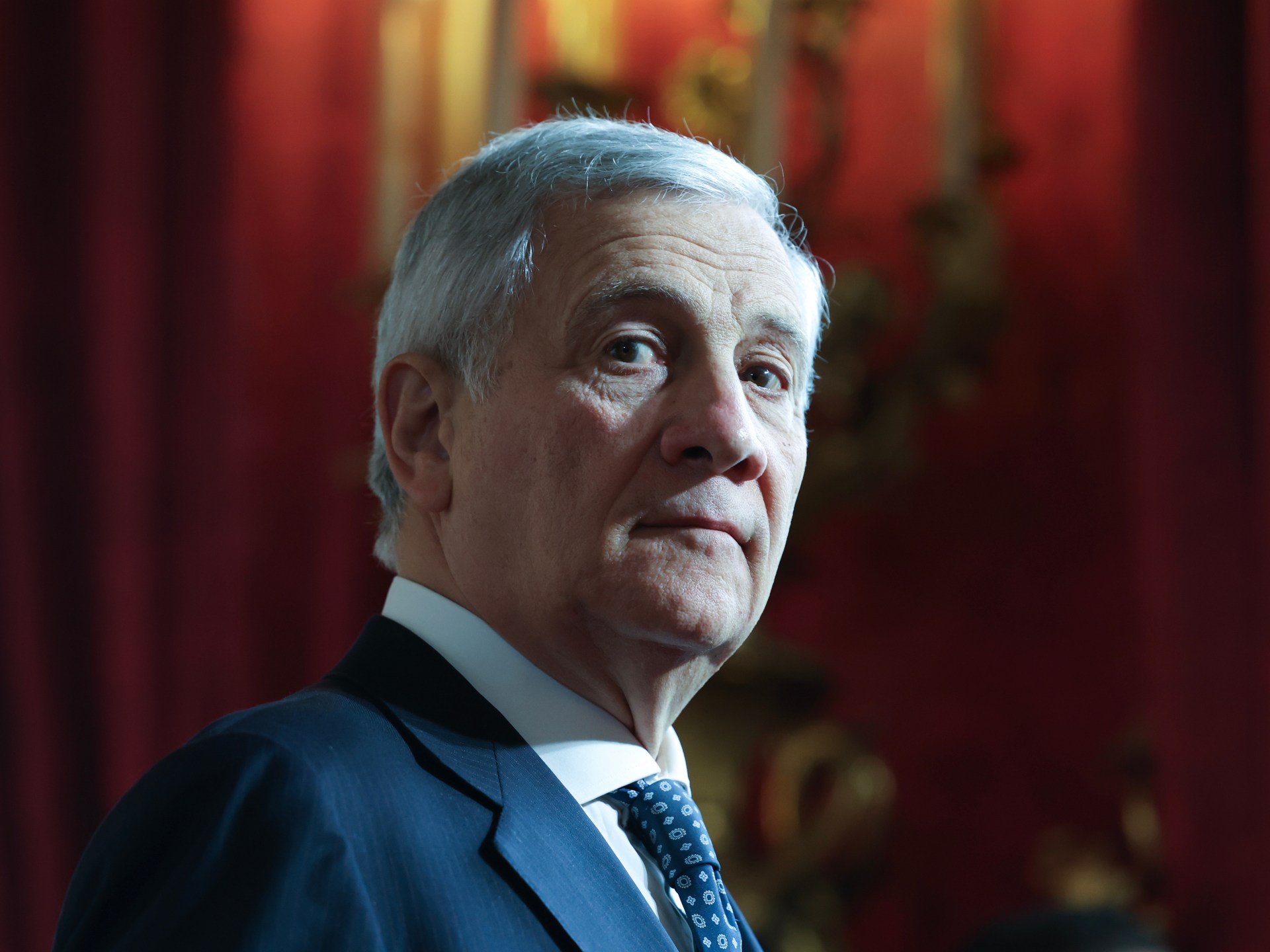
Italy’s Foreign Minister Antonio Tajani said it was a mistake for Ukraine to “violate Libya’s sovereignty” and that Rome, which has a small military presence in Libya, had received no prior notice of the operation.
“Italy was absolutely unaware of Kyiv’s intentions to strike in Libyan territorial waters, even inside a port,” Tajani told Italy’s Corriere della Sera newspaper.
Italy’s far-right League party, which is a member of the coalition government, also criticised the attack, saying it risked sowing instability inside Libya.
The comments expose a rare rift with Ukraine, which Italy has largely supported in the war against Russia. Italy has provided Ukraine with more than 3 billion euros ($3.29bn) worth of military aid, according to data from the Kiel Institute think tank, while also backing sweeping sanctions against Russia.
However, there has been division within Italy’s government over further aid to Ukraine, with Deputy Prime Minister Matteo Salvini, who heads the League party, opposing more weapons shipments or funding.
Matteo Villa, a senior research fellow at the Italian Institute for International Political Studies (ISPI), told Al Jazeera that Ukraine’s recent attack off Libya is likely to deepen these domestic tensions.
It “gives Salvini an opportunity to strengthen his case, questioning whether Western military assistance risks enabling Ukraine to pursue objectives that run counter to Italy’s own national interests”, said Villa.
What relationship does Italy have with Libya?
Italy, whose southern islands lie 300km (186 miles) across the Mediterranean from the Libyan coast, has spent years building ties with rival factions in western and eastern Libya.
“Over the past few years, Rome has shifted from almost complete support for the UN-backed Western government in Libya towards building working relationships with the Haftar-controlled East as well,” said Villa.
Italy has also for years helped provide funding, equipment and training for Libya’s maritime authorities, despite reports of migrants being abused and tortured in Libyan custody.
Advertisement
The aim has been to curb irregular migration from Libya to Italy, one of the most perilous and contested Europe-bound routes.
Alessia Melcangi, a nonresident senior fellow with the North Africa Program at the Atlantic Council’s Rafik Hariri Center and Middle East Programs, said Italy’s condemnation of Ukraine partly serves as a form of “damage control” to help Rome balance its competing geopolitical interests.
“Rome needs to demonstrate that its relationships with Kyiv, Tripoli and Benghazi give it meaningful influence over developments affecting its security,” Melcangi told Al Jazeera. “Otherwise, perceptions of exclusion or ambiguity could cause lasting diplomatic damage.”
Why is Italy concerned about conflict spilling into Libya?
Villa said Rome’s concerns are fuelled by its geographical proximity to Libya, as well as its economic and strategic interests there, specifically in terms of energy and “migration control”.
“Last year, Libya accounted for roughly a quarter of Italy’s crude oil imports, making it its largest supplier, and the country is by far the main departure point for migrants reaching Italy by sea,” said Villa.
Aldo Liga, a research fellow at the Middle East and North Africa Centre at ISPI, told Al Jazeera that potential escalation that further destabilises Libya would “threaten the security of trade routes and energy flows”, creating a volatile security situation in the Strait of Sicily.
“Instability in Libya is perceived as a direct threat to Italy’s national interests,” he said.
In his interview with Corriere della Sera, Foreign Minister Tajani cited the presence of the Italian military and Italian petroleum company Eni in Libya as being among his concerns about the Ukrainian intervention.
“What happened is worrying,” Tajani said, referring to the Ukrainian attack. “The war between Russia and Ukraine must be prevented from widening, avoiding new outbreaks from occurring.”
Related News
Trump, Vance and candidates make final push before US midterms
Thune re-elected as US Senate Republican leader after midterm losses
Man charged over ‘brutal attack’ on Somali-American in Minnesota