
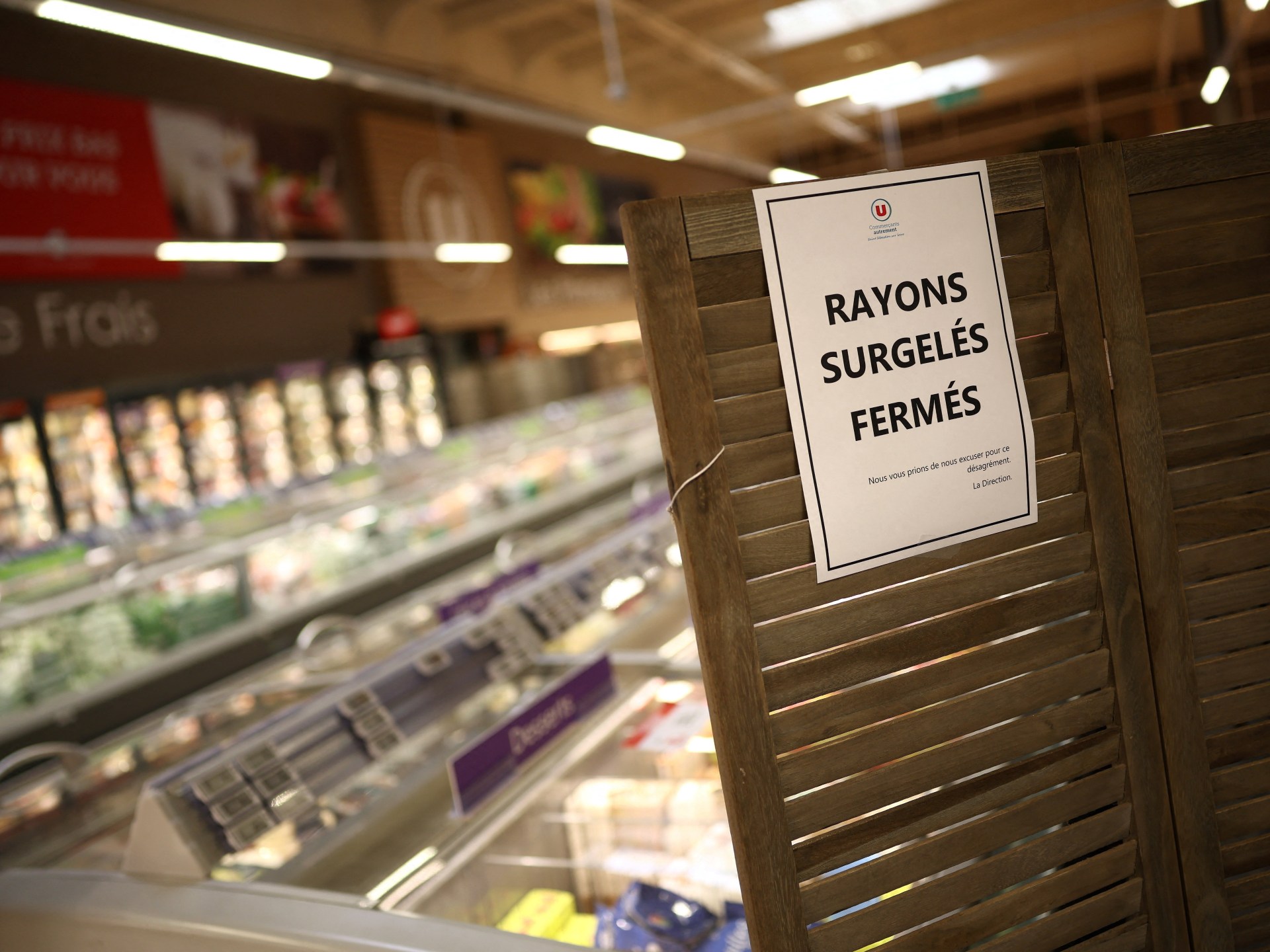

France says it has summoned Iran’s ambassador to Paris “to lodge a very strong protest” after it accused Tehran of carrying out a major cyberattack targeting supermarket fridges last month.
“It marks the first large-scale cyberattack aimed at sabotage on our national territory, and it constitutes a major attack on the nation’s interests and the security of the French people,” Foreign Minister Jean-Noel Barrot said on Tuesday.
- list 1 of 3AI could self-replicate on home devices within ‘months’, Anthropic says
- list 2 of 3Hundreds of supermarkets in France hit by ‘unprecedented’ cyberattack
- list 3 of 3French fridge fright: Why supermarkets have become target for hackers
end of list
“I can also tell you that we rule nothing out and will take all measures – including those we may not disclose publicly – that we deem proportionate and necessary to deter any further attacks,” he added.
Barrot, speaking on France Info television, said the government would push for European Union sanctions in response to what he called an “attack of unprecedented scale and aggression in our country”.
He said firm measures would be taken “to deter anyone who might be tempted, in Iran or elsewhere, to do it again”.
On Monday, Barrot said Iran’s Islamic Revolutionary Guard Corps (IRGC) was behind cyberattacks targeting more than 700 French supermarkets on October 11 and 12, when refrigerators were remotely accessed “to initiate abnormal, indefinite defrost cycles”.
Raised temperatures in fridges forced the supermarkets to throw away all perishable food.
Millions of euros’ worth of food was spoiled, according to retailers. In some cases, the raised temperatures sparked fires or melted equipment.
French supermarket groups E-Leclerc, Intermarche, Carrefour, Monoprix and Cooperative U were all hit.
Advertisement
Paris prosecutor Laure Beccuau said on Monday she had opened an investigation into Shahid Kaveh, a cyber unit of the IRGC, over the attacks.
The prosecutor’s office has requested international arrest warrants be issued for two Shahid Kaveh officials.

Similar incidents have since been reported in other European countries.
In a suspected cyberattack on November 2, temperature spikes were recorded in stores in Belgium, Estonia, Ireland, Luxembourg and Sweden.
Jody Westby, chief executive of Global Cyber Risk LLC, said tracking down the group directly responsible for the attacks is “very difficult” because of poor cooperation on international cybercrime investigations.
“It’s been a problem for 20 some years, and now it’s a little better, but only marginally so,” Westby told Al Jazeera. She said that it was difficult to track and trace the origin of such attacks “because of the nature of packet switching”.
In recent days, European air traffic has also been disrupted by false bomb alerts against dozens of flights, although the origin of those threats has yet to be determined.
Related News
Spain deports migrants from Ceuta in move criticised by rights group
Portugal cost-of-living protesters pour back into camps cleared by police

Flash floods kill five in Syria