

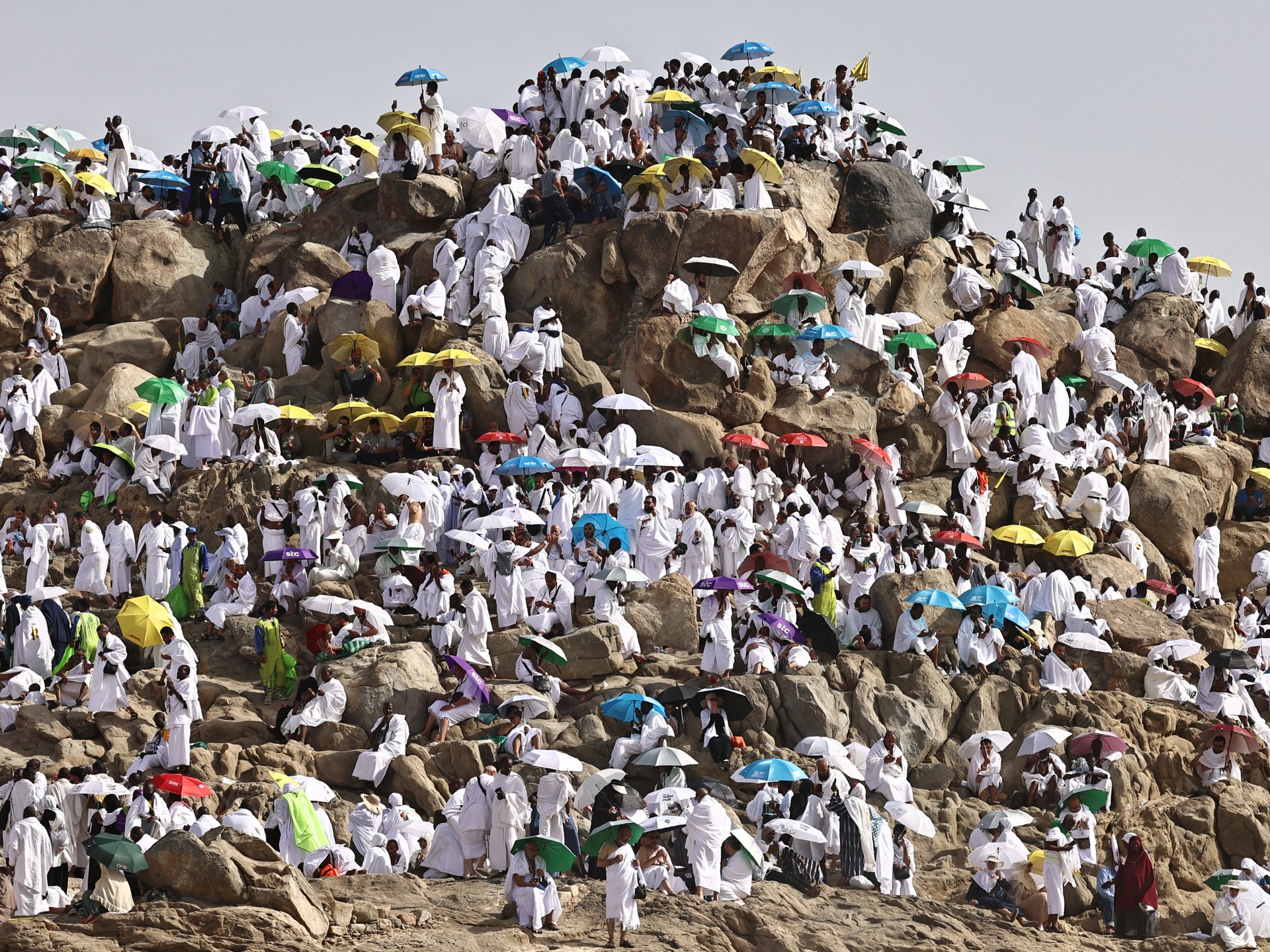

Huge numbers of Muslims prayed on Mount Arafat at the most important ritual of the Hajj pilgrimage, as a punishing desert sun sent temperatures soaring towards 40 degrees Celsius.
From daybreak on Tuesday, thousands of white-robed worshippers recited Quranic verses on the 70-metre (230-foot) rocky hill near Mecca, where the Prophet Muhammad is believed to have delivered his final sermon.
Volunteers lined the route, handing out bottles of water, parasols and food packages to the tens of thousands of pilgrims making their way towards the mount.
“It is an indescribable feeling,” said Ahmoud Abou Elezz, a 35-year-old Egyptian engineer, as he approached Mount Arafat for the first time.
More than 1.5 million people have joined the hajj this year, even as a war pitting the United States and Israel against Iran casts a long shadow across the Middle East.
During the fighting, Tehran retaliated with waves of drone and ballistic missile strikes, hitting major infrastructure and energy installations across the Gulf, including in Saudi Arabia.
More than 30,000 Iranians have made the journey, about a third of the 86,000 originally expected. Iran’s IRNA state news agency said the “wartime situation” explained the drop.
Despite the conflict, Saudi officials said over the weekend that more pilgrims have travelled from abroad this year than in 2024.
The hajj, one of the five pillars of Islam, is obligatory at least once in a lifetime for all Muslims who are physically and financially able to perform it.
Advertisement
With temperatures reaching 44 degrees Celsius in Mecca in recent days, Saudi authorities have urged pilgrims to drink plenty of water and protect themselves from the sun during the mostly outdoor rituals, which can stretch over five days or more.
Because men are prohibited from wearing hats, many carry umbrellas to shield themselves from the blistering heat.
After the day on Mount Arafat, pilgrims will spend the night in Muzdalifah, where they collect pebbles for the symbolic “stoning of the devil” ritual in Mina, set to begin on Wednesday.
The hajj is said to trace the route of the Prophet Muhammad’s final pilgrimage about 1,400 years ago, and has long been a crucial source of legitimacy for the Al Saud dynasty, whose monarch bears the title “Custodian of the Two Holy Mosques” in Mecca and Medina.
Related News
Why is Iran increasingly targeting the UAE in its war messaging?
Netanyahu visited UAE in ‘secret’ during US-Israel war on Iran, office says
US seeks indictment of former Cuban leader Raul Castro