
Caribbean Real Estate Is A $1.87 Trillion Market – So Why Are Caribbean Developers Still Getting Rejected For Funding?
 26 May 2026
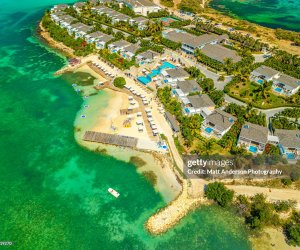


News Americas, NEW YORK, NY, Tues. May 26, 2026: The numbers tell a story of enormous promise. According to Statista’s Caribbean Residential Real Estate Market Outlook, Caribbean real estate will reach $1.87 trillion in market value in 2026, growing at 5.19% annually and is projected to reach $2.28 trillion by 2029.
The report noted “the Residential Real Estate market in the Caribbean is experiencing significant growth and development. Customer preferences are shifting towards more luxurious and high-end properties, and there is a growing trend of international buyers investing in Caribbean real estate. Local special circumstances, such as the region’s natural beauty and favorable climate, contribute to the attractiveness of Caribbean real estate. Underlying macroeconomic factors, including stable economic growth and favorable government policies, further drive the market’s growth. Overall, the Residential Real Estate market in the Caribbean presents a lucrative opportunity for investors and developers alike.”
Record sales figures are being posted across the region. As the 2026 Dominican Republic Real Estate Market Report noted, the Dominican Republic alone sees $30 to $40 billion in annual real estate transaction volume, with foreign buyers accounting for 18 to 22% of coastal purchases. And yet, when Caribbean real estate developers show up to access the capital that should logically follow a $1.87 trillion market — they are being rejected. Consistently. At an alarming rate.
After filtering more than $200 million in deals at AI Capital Exchange – the world’s first AI-powered debt capital platform built specifically for Caribbean and emerging market projects – a troubling pattern has emerged that has nothing to do with the market opportunity and everything to do with project preparation.
1. Zero Equity Contribution
The most common deal-killer is straightforward: developers are arriving at the table asking for 100% financing with zero equity of their own in the project. Institutional lenders – whether development banks, private equity funds, or debt capital providers – require skin in the game. A project requesting $5 million, $10 million, or $50 million with no equity contribution from the developer is not a fundable deal. It is a wish.
The expectation across most institutional lending frameworks is a minimum of 20 to 30% equity contribution from the project owner before external debt capital is even considered. Caribbean developers consistently arrive below this threshold – often with zero.
2. No Revenue History Or Cash Flow Evidence
The second most common rejection reason is the absence of revenue history or demonstrable cash flow. A vacant lot in Barbados with an architect’s rendering is not a business. A planned resort in Jamaica with no pre-sales, no letters of intent from operators, and no occupancy projections backed by market data is not a fundable project.
Lenders need to see – at minimum – signed offtake agreements, pre-sales data, projected cash flows backed by comparable market evidence, or existing revenue from a phase one development. Caribbean developers overwhelmingly arrive with vision decks instead of financial documentation.
3. The Ask Far Exceeds The Project’s Preparation Stage
The third pattern is perhaps the most revealing. Projects regularly arrive at AI Capital Exchange requesting $10 million, $25 million, or $50 million in debt capital for developments that have not yet secured planning permits, environmental clearances, architectural plans, or land title documentation. The size of the ask signals ambition. The absence of preparation signals risk. And as any institutional lender will confirm, capital does not follow unmitigated risk.
This is not a Caribbean-specific failure of ambition. Caribbean entrepreneurs and developers are building real projects with real potential in one of the world’s most desirable real estate markets. The failure is one of preparation and education.
As Agritecture reported in January 2026, CARICOM nations currently import approximately 80 to 90% of their food at a cost exceeding $6 billion annually – a dependency driven by the same structural gap between regional potential and regional preparation. The capital access gap in real estate follows the same pattern. The opportunity exists. The market is real. The capital is available. The preparation is not.
For Caribbean real estate developers seeking institutional debt capital in 2026, capital readiness means arriving with:
- A minimum 20 to 30% equity contribution to the project
- Clean land title documentation
- Secured planning and environmental permits
- Completed architectural and engineering plans
- Financial projections backed by comparable market data
- Pre-sales, letters of intent, or signed operator agreements
- A clear exit strategy for the lender
- Audited financial statements for the development entity
Projects that arrive with all of these elements are fundable. Projects that arrive without them – regardless of the strength of the underlying opportunity – are not.
AI Capital Exchange offers a free capital readiness assessment at investcaribbeannow.com – a tool designed specifically to help Caribbean developers understand exactly where their project stands before approaching institutional lenders, and what steps are required to close the preparation gap.
As Statista reported, the Caribbean real estate market is real and growing. The global capital looking for Caribbean real estate returns is real. The window between those two realities is preparation – and that gap is closeable.
Related News
Can The Caribbean Be The Next AI Data Center Valley?

Guyanese Entrepreneur’s AI Capital Exchange Selected For HICOOL Regional Round
The Most Powerful Caribbean Passports For 2026