

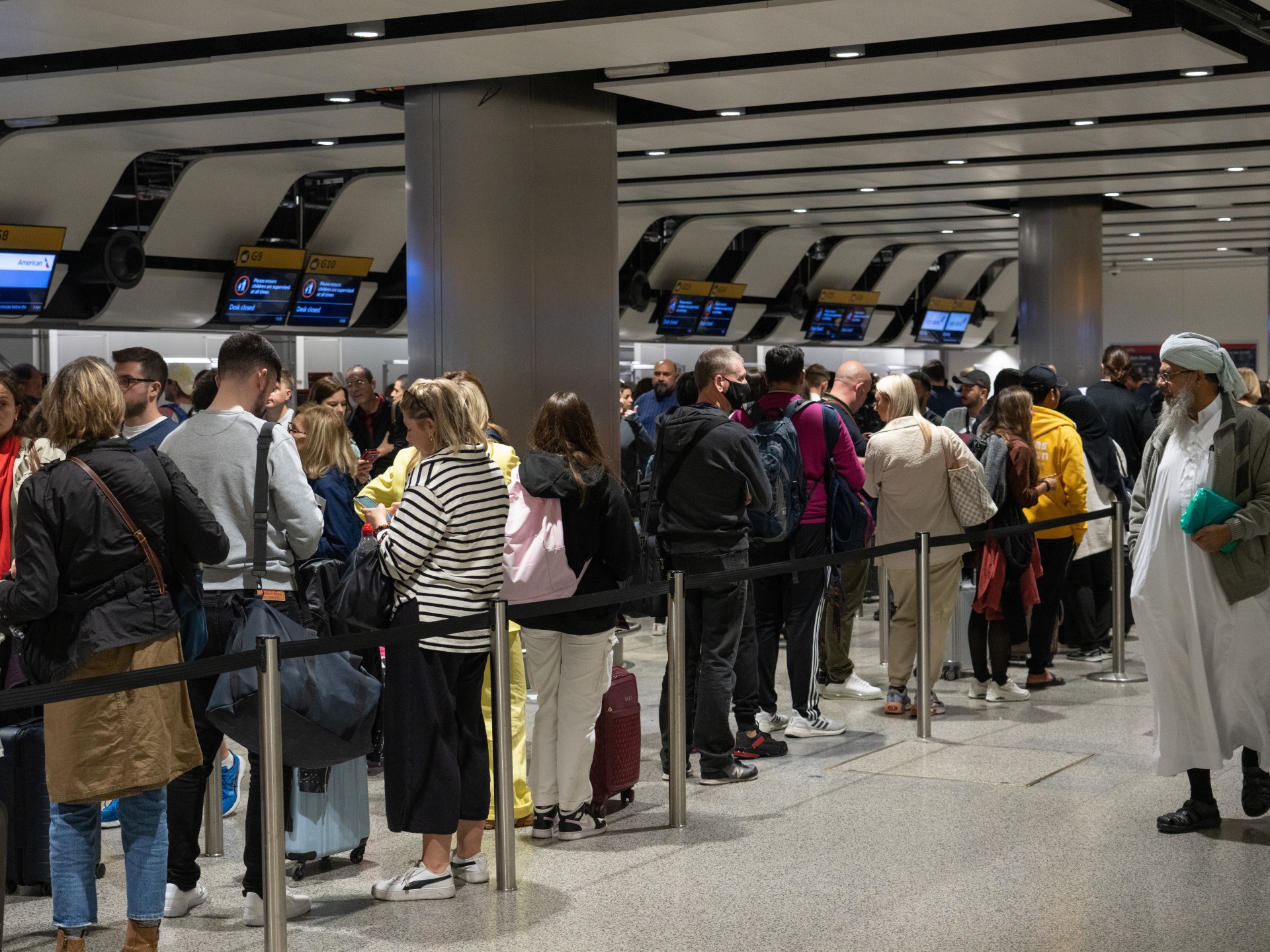

Long-term net migration to the United Kingdom nearly halved in 2025, falling to levels last seen before the post-Brexit immigration system was introduced, as tougher government measures enacted in recent years restricted arrivals.
The Office for National Statistics (ONS) said on Thursday that net migration fell to 171,000 in the 12 months to the end of December from 331,000 a year earlier, extending a sharp decline from a record peak of 944,000 in 2023.
- list 1 of 3The implosion of Keir Starmer’s Labour
- list 2 of 3The Take: The implosion of Keir Starmer’s Labour
- list 3 of 3Burnham set to run for UK parliament increasing pressure on PM Starmer
end of list
Immigration – both legal and illegal – has dominated political debate in the for more than a decade, with successive governments imposing stricter visa rules and higher salary thresholds. The current government has pledged to go further.
The British Future think tank said the country was “experiencing one of the sharpest falls in net migration on record”, but that most people believed the opposite, according to its research.
Interior Minister Shabana Mahmood welcomed the progress from tighter policies, but said that there was still work to do.
“We will always welcome those who contribute to this country and wish to build a better life here. But we must restore order and control to our borders,” she said, adding that the government’s new skills-based migration would reward contribution and end reliance on “cheap overseas workers”.
On Saturday, far-right activist Tommy Robinson drew tens of thousands of people in London to attend his “unite the kingdom” march. Islamophobic and ethnonationalist hate flyers were reportedly distributed to the crowds. “In a country saturated with degenerates, grifters and imported political enemies … We are a brotherhood of White Europeans who share the same values,” read one leaflet.
Advertisement
Meanwhile, employers and economists have raised concerns about labour shortages, particularly in sectors such as care and hospitality.
The ONS said long-term net migration was now close to its level before the new immigration system was introduced at the start of 2021, when the UK transitioned out of European Union membership, and when COVID restrictions were still in place.
The drop reflects policy changes implemented from 2024, when the previous Conservative government banned most international students from bringing dependents and raised salary thresholds for skilled worker visas.
The current Labour government has tightened policies further as it seeks to counter Nigel Farage’s populist Reform UK party, which campaigns on an anti-migration platform and holds a double-digit lead in opinion polls.
To that end, the government last year moved to end overseas recruitment of care workers, the single biggest driver of work migration in recent years, and raised the salary threshold for skilled worker visas further. It has since announced more sweeping reforms, including plans to speed up deportations of those arriving illegally and double the qualifying period for some workers to obtain settled status to 10 years, as well as making refugee status temporary.
Related News

Russia ‘dangerously’ intercepts British spy plane over Black Sea: Ministry

Palestine weekly wrap: Jerusalem Day, Nakba mark week of surging attacks

Khartoum’s slow recovery amid cautious return