

“I have all the cards,” posted the White House on its X account on Sunday, alongside an image of President Donald Trump holding playing cards from the Uno game, in a message appearing to signal Washington’s confidence in its ongoing war on Iran.
Uno is a card game in which the winner is the first to get rid of all their cards.
- list 1 of 4Israel threatens Gaza war resumption to force disarmament as ‘truce’ frays
- list 2 of 4Trump says US will ‘help free up’ ships stuck in Hormuz Strait
- list 3 of 4Iran lawmaker says Strait of Hormuz will not return to pre‑war state
- list 4 of 4Oil prices flat as Trump’s plan for Strait of Hormuz fails to calm market
end of list
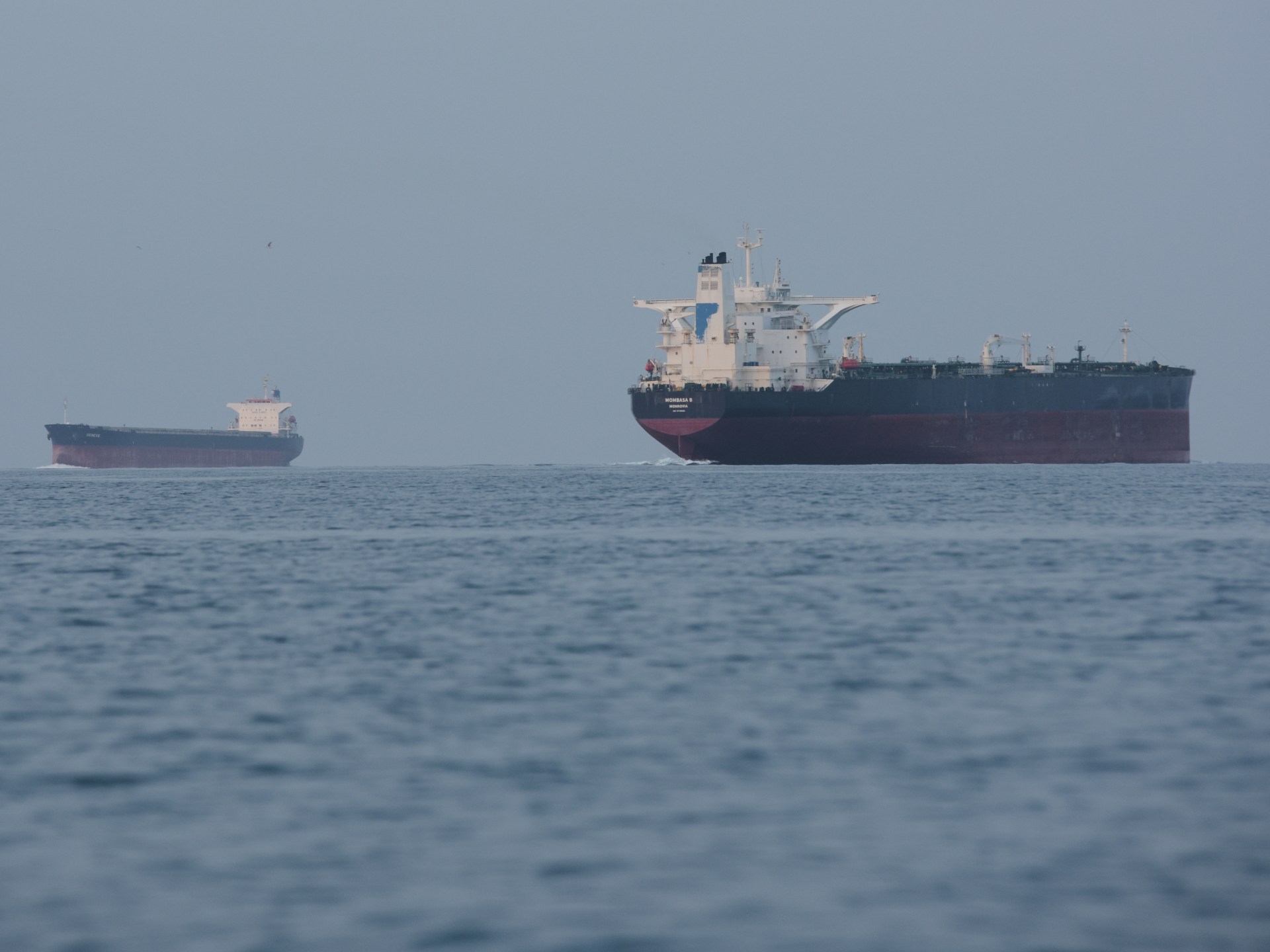
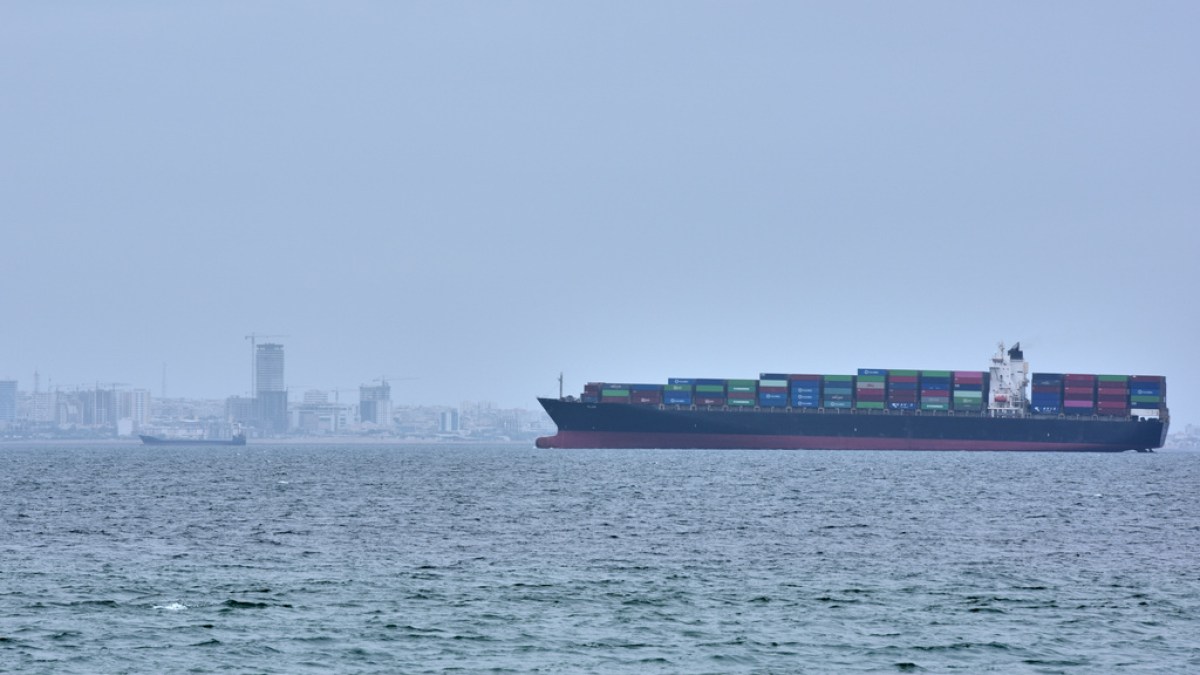
The post came after Trump announced on his Truth Social platform that the US military would begin guiding ships stranded around the Strait of Hormuz by the war on Monday, in a sign that the conflict could further escalate, despite the near-month-long fragile ceasefire. Tehran has been effectively blocking nearly all shipping from the Gulf for more than two months, after the US and Israel attacked Iran two months ago, disrupting global energy supplies.
“We have told these countries that we will guide their ships safely out of these restricted waterways, so that they can freely and ably get on with their business,” Trump said, dubbing the campaign “Project Freedom”. “They are merely neutral and innocent bystanders!”
The president added that US negotiators were engaged in “very positive discussions” with Tehran, which could lead to “something very positive” without further elaboration.
Iran, however, reacted by insisting that the security of the waterway was in the hands of its armed forces, and warned that “any safe passage and navigation in any situation” should be “carried out in coordination with the armed forces”.
On Monday, the Iranian Fars news agency reported that a US warship had been hit by two Iranian drones, the claim was denied by US Central Command.
Advertisement
So what leverage do the US and Iran hold over each other, and what happens next?
In response to Trump’s “I have all the cards” social media post, Iran’s Consulate General in Hyderabad, India, posted its own image on X.
“Yes, we have less cards,” Iran’s consulate in the Indian city of Hyderabad wrote on X, together with a photo of an Iranian military spokesperson holding four Uno cards compared to Trump’s five, pointing out that usually holding all the cards means you are losing, not winning, in the game of Uno.
In response to Trump’s “Project Freedom” declaration, Iran’s Islamic Revolutionary Guard Corps (IRGC) warned that ships deemed to be in breach of its rules in the Strait of Hormuz “will be stopped by force”, while insisting there has been no change in how it manages traffic through the strategic waterway.
On Monday, it issued a new map of the Strait of Hormuz with boundaries extending further to the east than its previous one, and said any ship travelling between the two sides must coordinate with the IRGC first.
“There has been no change in the management process of the Strait of Hormuz,” spokesperson Sardar Mohebbi said, adding that vessels that comply with the “transit protocols issued by the IRGC Navy” will be “safe and secure”.
“Other maritime movements that are contrary to the declared principles of the IRGC Navy will face serious risks. Violating vessels will be stopped by force,” he said.
What leverage does the US have over Iran?
Sanctions
The United States’ most enduring source of leverage over Iran remains its sanctions regime, which was launched in 1979 when Ayatollah Ruhollah Khomeini declared Iran an Islamic Republic.
Successive US administrations over the past 47 years have hit Tehran with a series of financial restrictions targeting Iran’s banking, oil exports and access to international markets – the US says the sanctions are a response to Iran’s nuclear programme.
Sanctions have significantly constrained Iran’s economy, limiting government revenue and contributing to inflation and currency depreciation. Measures enforced through the US Treasury also deter other countries and companies from engaging with Iran, further strangling its economy.
The economic pressure has been central to US strategy towards Iran, particularly during its attempts to force Tehran back to negotiations over its nuclear programme, under both Democratic and Republican administrations.
Military power
Beyond economics, the US maintains overwhelming military superiority, especially air power. Aircraft carriers, long-range bombers and precision strike capabilities give Washington the ability to target Iranian infrastructure with relatively low risk to its own forces.
Advertisement
US bases across the Gulf, as well as military partnerships with regional allies – most notably Israel – reinforce this advantage.
American forces, together with the Israeli army, have killed more than 3,000 people, and struck thousands of sites across Iran in the current war, including Iran’s energy and nuclear sites.
Naval blockade
Since mid-April, the United States has enforced a widespread naval blockade of Iranian ports and ships. The operation began on April 13 after talks between Washington and Tehran collapsed, with US forces ordered to stop or divert vessels entering or leaving Iranian ports.
US forces have since intercepted or turned back dozens of ships, and seized a container ship, the Touska. On Monday, the US announced that its crew had been repatriated to Iran from Pakistan, where they were taken after their ship was captured in the Gulf of Oman last month.
According to Trump, the blockade is designed to choke Iran’s oil exports, its main revenue source.
US officials say the measures have severely disrupted Iran’s trade, which relies heavily on sea routes.
What leverage does Iran have?
Strait of Hormuz
The vital waterway is Iran’s most significant strategic asset, the narrow passage ships one-fifth of the world’s oil and liquefied natural gas (LNG) supplies in peacetime.
Tehran has effectively closed the strait since the war began on February 28, sending global oil and gas prices soaring and energy markets into turmoil. Iran has repeatedly demonstrated its ability to target shipping, seize vessels, or conduct military exercises, demonstrating its ability to close or restrict the strait.
The result is soaring energy prices globally, forcing many countries to implement severe austerity measures to soften the blow.
Last week in the US, the average price of a gallon (3.8 litres) of gasoline (petrol) rose to $4.30, according to the American Automobile Association (AAA), up from less than $3 before the war.
Surging energy costs have driven up inflation and deepened economic uncertainty in the US, compounding Trump’s political troubles amid overwhelming disapproval for the war amongst Americans.
Even if the US does begin escorting ships through safely – the threat from mines or Iranian strikes may be enough to prevent tankers from attempting to sail, experts say. Insurance companies are also unlikely to underwrite voyages.
Regional allies
Iran’s network of allied groups across the Middle East is another asset that Tehran relies on heavily. These include armed groups in Iraq and Syria, as well as Hezbollah in Lebanon and the Houthis in Yemen
Through these groups, Iran has exerted pressure indirectly, targeting US interests and allies without engaging in direct confrontation.
One critical threat Iran has previously made is for the Houthis to disrupt shipping in the Bab al-Mandeb, another vital maritime chokepoint linking the Red Sea to the Gulf of Aden.

The Houthis, an Iran-aligned group in Yemen, have previously targeted shipping in this area, most notably during Israel’s genocidal war on Gaza, further raising concerns about the security of global trade routes.
Advertisement
Roughly 4.2 billion barrels of crude oil and refined petroleum liquids flowed through the strait in 2014, accounting for about five percent of global supply.
Cheap drones and cluster bombs
While nowhere near the military capabilities of the US, Iran’s investment in missile and drone programmes has proven to be an effective means of deterrence. That is particularly through its ability to threaten regional US bases and impose significant costs on regional countries hosting American assets involved in military operations against Tehran.
While the US undoubtedly has a more sophisticated and powerful arsenal at its disposal, the interceptors it uses to combat Iranian drones cost around $4 million each, while Iran’s Shahed drones can be mass-produced at $20-50,000 each.
Furthermore, Iran’s ballistic missiles have proved capable of breaching Israel’s much-lauded “Iron Dome” defence system on several occasions. Iran has also dropped cluster bombs, which divide before they can be intercepted, making them much harder to stop.
So does the US really hold the most cards?
Michael Clarke, visiting professor at the Department of War Studies, King’s College London, said Trump’s overwhelming conventional military strength has failed to translate into strategic leverage on the ground.
“President Trump thinks he is a great poker player,” Clarke told Al Jazeera. “He thought America’s sheer destructive potential put all the ‘cards’ in his hand” when starting the war on Iran.
But Iranian forces have consistently disrupted US expectations through asymmetric tactics, he said.
“At every turn, the Iranians have come up with asymmetric tactics – vicious, reckless tactics – that have negated everything the Americans have tried to do,” Clarke noted, describing a pattern in which traditional US military superiority has been blunted by unconventional responses.
Despite significant American forces and assets in the region – including “no fewer than three US Carrier Strike Groups, two Marine Expeditionary Units, hundreds of combat aircraft and thousands of troops”, Clarke argued that Washington has struggled to find an effective use for its multi-billion-dollar resources at its disposal.
Moreover, he said, domestic pressure on Trump is growing. Trump “can’t find a way to use them [US forces] that will make any real difference to the current stalemate in the limited time he has before his own MAGA base concludes he has lost the game”.
Clarke also highlighted the willingness of Iran’s IRGC to escalate tensions. “Whatever this war might do to Iranian society, the IRGC is prepared to gamble with its own existence in the fight,” he added.
Related News
US forces detain Iran-linked tanker Tifani with ceasefire talks on edge
New Florida map boosts Republican seats amid national redistricting fight
US sending envoys to Pakistan, raising hopes of talks with Iran’s Araghchi