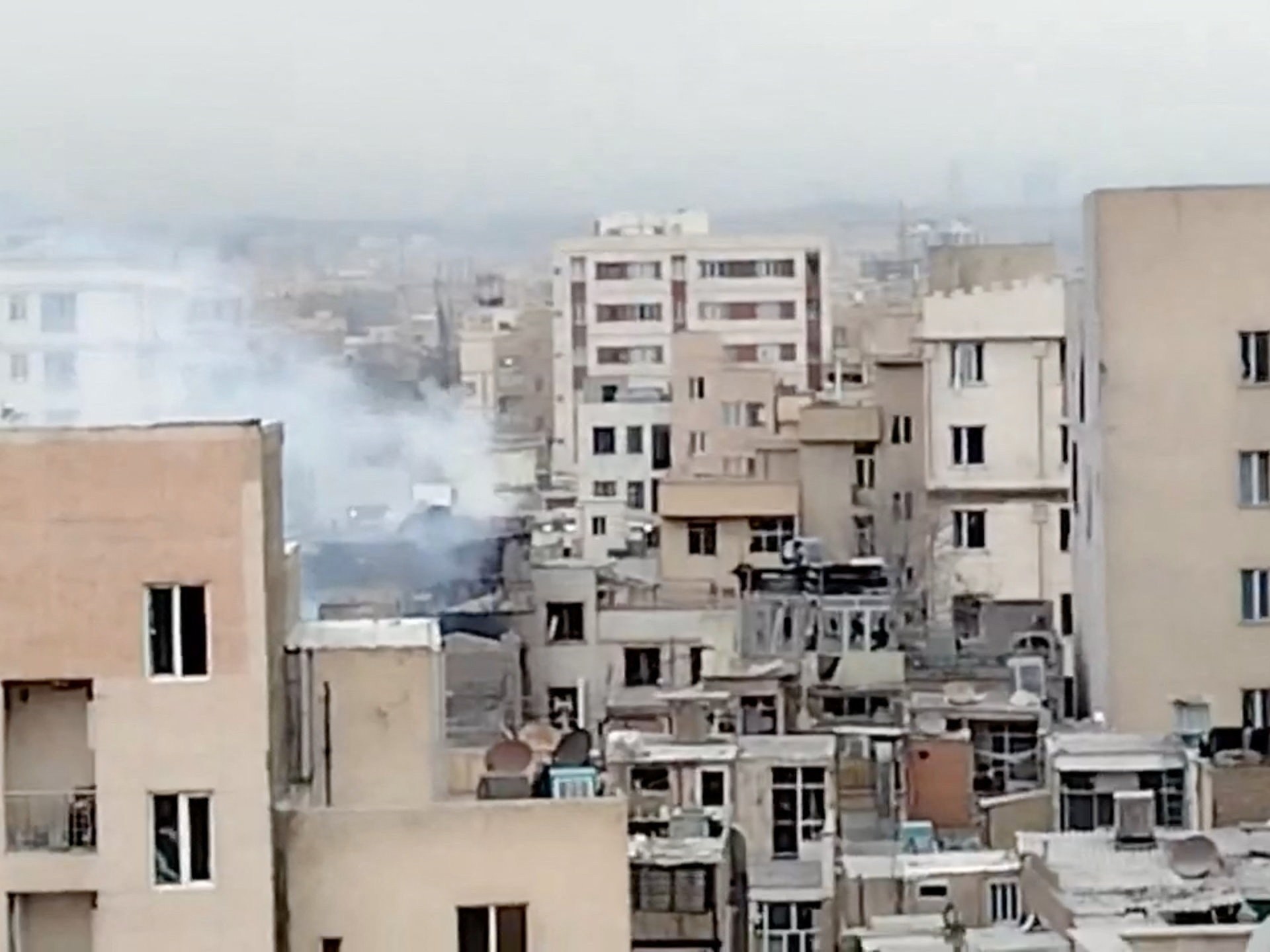

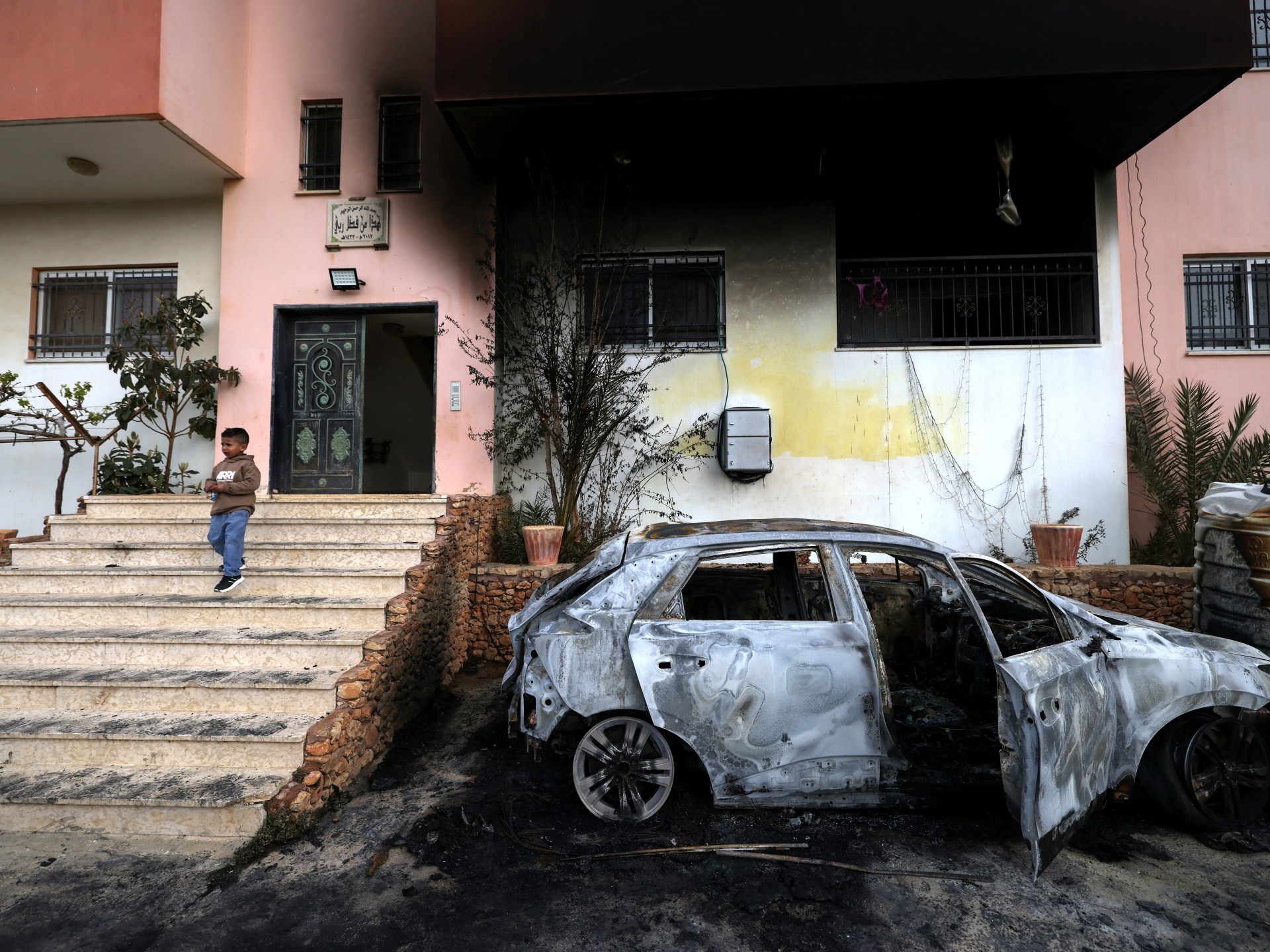

As Muslims across the world marked Eid al-Fitr, the end of Ramadan, and as the United States-Israel war on Iran stretched into its fourth week, Palestinians in the occupied West Bank have endured an outpouring of violence. Gates at the entrances to many Palestinian communities in the territory, which many Israelis want to illegally annex into their state, were blocked by Israeli settlers, who also burned homes and bulldozed olive groves.
In a move particularly symbolic of the current Israeli policy towards expressions of Palestinian national identity, the Israeli authorities used the current conflict with Iran to justify the emptying of the Al-Aqsa Mosque compound of Muslim worshippers during Eid, reportedly for the first time since Israel captured the holy site in 1967. Israeli police additionally used sound grenades and physical force to disperse Palestinians attempting to pray outside the gates of Jerusalem’s Old City, following days of similar forced dispersals of worshippers.
- list 1 of 3Israel’s displacement of civilians in Lebanon is a possible war crime
- list 2 of 3Israeli settlers rampage through West Bank towns for second night in a row
- list 3 of 3‘Unprecedented’: Israel, US carry out extensive strikes across Iran
end of list
The war had deadlier consequences on March 18, when four Palestinian women were killed by rocket debris in Beit Awwa, in a southern West Bank Palestinian community that, unlike Israeli cities and settlements, lacks air raid sirens or bomb shelters.
And yet, despite the war, Palestinian communities remain focused on the surge of settler violence and movement restrictions imposed since the conflict’s outbreak. Following the Saturday death of Yehuda Sherman, a settler from Beit Imrin, the recent violence peaked in the early hours of Sunday, when approximately 100 masked settlers clad in black descended on the villages of Jalud and Qaryut, south of Nablus.
Advertisement
According to local Palestinian sources, they torched at least five vehicles, set fire to more than 10 homes, burned the Jalud village council building, attacked a fire truck and injured its driver, and attempted to burn a mosque. The attacks continued, despite an Israeli army and police presence on the outskirts of both villages.
Violence spread further on Sunday, with settlers setting fire to vehicles in Deir Sharaf, northwest of Nablus; torching homes and injuring residents in Deir al-Hatab; and attempting to burn a medical clinic in Burqa – only narrowly stopped by Palestinian residents who intervened.
The attack was apparently in retaliation for Sherman’s death, which the settlers blamed on a Palestinian ramming into his vehicle. Local Palestinian community members suggest the settler stole a farmer’s pick-up truck and crashed it into a ditch. Speaking to The Times of Israel, a settler who attended Sherman’s funeral described the 18-year-old as someone who was actively seeking to expel Palestinians from the West Bank, saying, “Every day, he took his herd out [to pasture] to remove the enemy from all the territory there so that Jews will come back to this place.”
In a reflection of how entrenched support for the settlers has become in the Israeli government, and despite the outpost Sherman lived in being illegal even under Israeli law, Israeli Finance Minister Bezalel Smotrich attended Sherman’s funeral on Sunday and said the Israeli government was working to bring down the Palestinian Authority, and end the limited autonomy Palestinians have in some parts of the West Bank.
Israeli authorities have not responded to Al Jazeera’s request for comment.
A wave of assaults and arrests
Despite the settler attacks, it is Palestinians who have largely found themselves arrested by Israeli forces.
On Saturday night, settlers raided al-Fandaqumiya, south of Jenin, setting fire to homes and vehicles before moving to the neighbouring village of Silat al-Dhaher, where at least two more homes were torched and six residents injured. According to local Palestinian networks, Israeli forces did not intervene to stop the attackers or prevent them from moving between villages.
Palestinian activists also reported that, in Jiljiliya, northeast of Ramallah, on March 17, settlers raided the home of Yousef Muzahim, and then called the Israeli army to arrest him and his two sons, aged 12 and 14.
Similar incidents were reported in Salfit governorate and the South Hebron Hills.
Land seizures and demolitions
Amid a longstanding campaign to seize Palestinian land throughout the occupied West Bank, the past week has seen a continuation of Israeli land seizure and agricultural destruction in the territory.
Advertisement
Israeli bulldozers were filmed uprooting olive trees across multiple days in Nilin along the separation wall, while in Nablus governorate’s Huwara, more than 100 dunams (0.1 square kilometres) containing more than 1,500 olive trees were bulldozed. In the southern West Bank’s Masafer Yatta, settlers destroyed more than 130 olive trees in Khirbet Mughayir al-Abeed by reportedly releasing livestock into cultivated land for them to feed on.
And on March 16, Israeli authorities issued military orders to seize 268 dunams (0.268 square kilometres) “for military purposes” belonging to families in Tubas and Tammun, in the northeast West Bank, followed two days later by soldiers arriving at Tammun with an excavator to begin preparation work for a new road. The orders came days after the March 15 killing of four members of a Palestinian family, including two children, travelling by car in Tammun, by Israeli forces.
In the Jordan Valley’s Fasayel al-Wusta, Israeli forces demolished the last remaining home in the community, after other families had been forcibly displaced months earlier by settler violence – despite the Israeli High Court reportedly having approved an agreement permitting the family to stay. Another demolition by the Israeli Civil Administration was photographed taking place on Monday in Khirbet al-Marajim, southwest of Duma, in the Nablus governorate.
Roads blocked, communities isolated
Since March 17, settlers have been massing nightly at more than 10 road junctions – from Zaatara and Yitzhar to Homesh and as-Sawiya – attacking Palestinian vehicles. On Sunday, Route 60 from Sinjil to Homesh was closed entirely for the Beit Imrin settler’s funeral procession, with all Palestinian entrances shut and movement restricted to ambulances with prior coordination.
Intensifying movement restrictions put in place by authorities since the start of the Iran war, settlers additionally closed the entrances of many other Palestinian communities, according to reports from local Palestinians.
The settler road blockades had begun after settlers declared that “a red line has been crossed in the persecution of the pioneer settlement”, in response to Israeli military actions dismantling a small number of illegal outposts – grievances that spilled into stone-throwing attacks on Palestinian vehicles at nightly junction gatherings.
Amid international reports of the torture of a Palestinian man in Khirbet Hamsa, as well as the circulation of an open letter signed by hundreds of former security officers denouncing “Jewish violence and terrorism”, on March 18, Israeli military Chief of Staff Eyal Zamir publicly condemned settler violence, calling attacks on Palestinian civilians “morally and ethically unacceptable”.
Former Prime Minister Naftali Bennett, a longtime leader in the settler movement and primary rival to Prime Minister Benjamin Netanyahu in upcoming Israeli elections, echoed the condemnation. Yet across the same week, settlers were reported by local activist networks as rebuilding a demolished outpost southwest of Nablus – from which attackers had descended upon Qusra on March 14 to kill a resident – under Israeli military protection.
Advertisement
According to Israeli human rights organisation B’Tselem, since the war on Iran began on February 28, at least 14 Palestinians have been killed in the West Bank, including two minors – eight by the military, six by armed settlers – a rate with little recent precedent.
Restrictions on aid into Gaza persist
In the Gaza Strip, a separate crisis has deepened in near-silence. The amount of aid entering Gaza has plummeted since the US-Israel war on Iran began, sending prices soaring. Only on Thursday did the Rafah crossing with Egypt reopen, under severe restrictions on the movement of people in and out of the Gaza Strip.
The World Health Organization has warned that hospitals face shortages of medicines, medical supplies and fuel. Such price shocks follow previous months in which famine conditions had appeared to recede somewhat from the height of Israel’s genocidal war on Gaza, with humanitarian organisations – many of whom have had their operations in Gaza and the West Bank recently halted by Israel – worrying of a resurgence in famine conditions.
Amid flagging reconstruction efforts, this past week, US officials told NPR that they had given Hamas mediators a formal proposal to disarm to ensure large-scale reconstruction of the decimated Gaza Strip. The work of the US-led Board of Peace, created in part to facilitate the full enactment of the October Gaza ceasefire, has largely been paused since the US and Israel launched their war on Iran on February 28.
Without further advancement of the terms of the October “ceasefire”, Israeli air attacks killed at least three people, including a child, in Khan Younis on March 17, four more in two drone attacks in the area of Gaza City on March 19, and four more on Sunday – among them three police officers hit in the Nuseirat refugee camp.
At least three Palestinians were reported wounded in another Israeli attack that day in Gaza City. According to Palestinian journalist Motasem Dalloul, heavy Israeli tank fire was reported east of Gaza City on Monday morning, with additional Israeli artillery shelling in Bureij refugee camp. Since the October ceasefire in Gaza, 680 Palestinians in Gaza have been killed, according to Palestinian health officials.
Related News
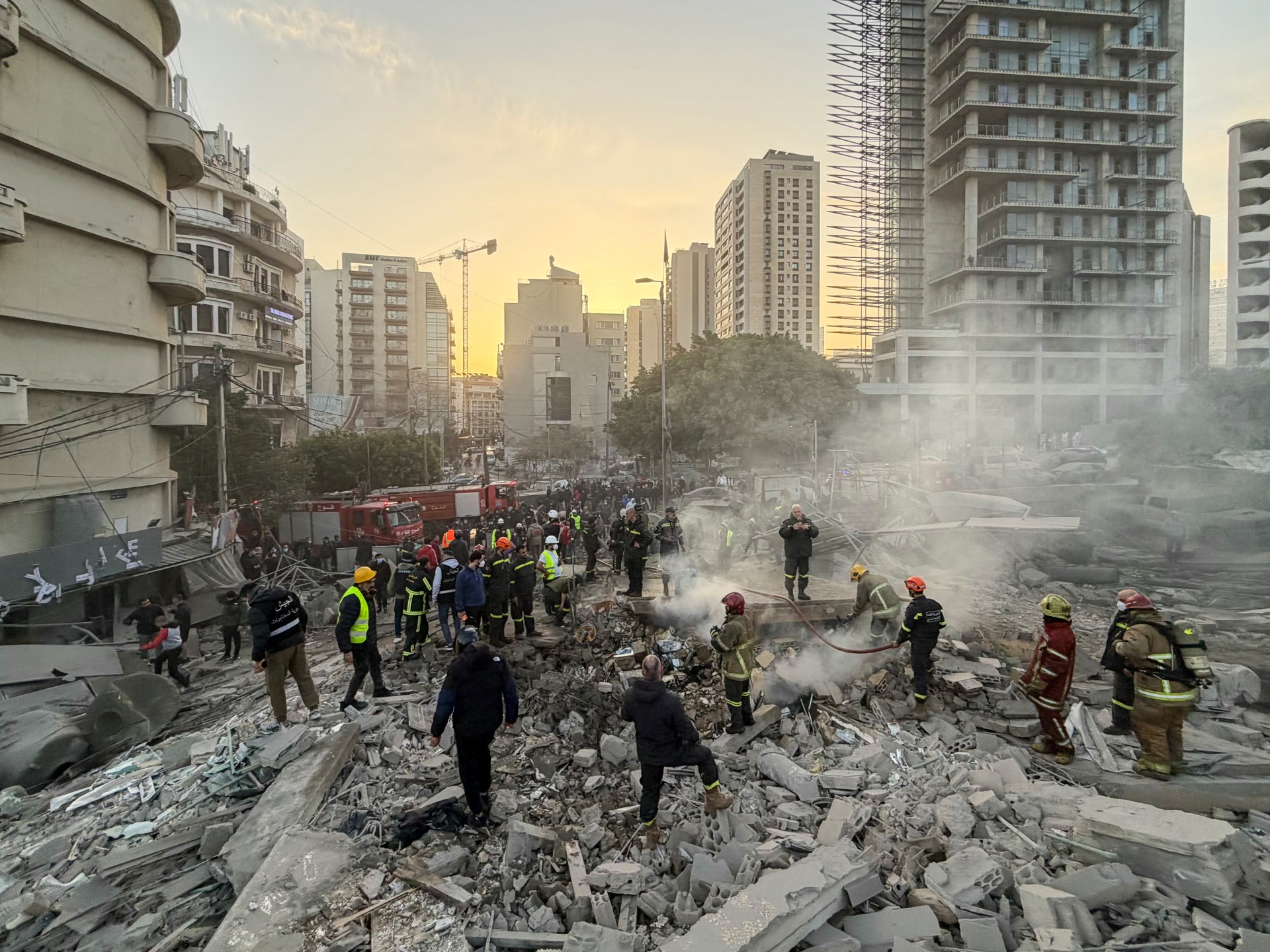
Israel bombs central Beirut, killing 6, strafes south, east Lebanon

Italians vote in high-stakes justice referendum in key test for Meloni

Australia grants asylum to 2 more members of Iranian women’s football team